Creative, captivating and colourful: Ocean-inspired learning for KS1&2
- Tuesday 2nd December 2025
- Lesson Planning, KS1, KS2, School Trip
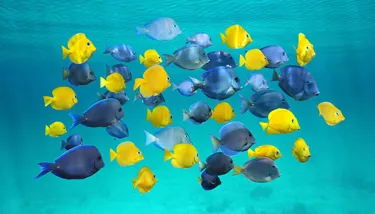
Fascinating wildlife, colourful coral reefs and even an abandoned shipwreck or two: an ocean-themed project can be a brilliant way to excite and engage primary students (KS1&2).
Be it studying the science of underwater habitats, the geography that explains swells, storms and the seaside, the richness of maritime history or even the musical soundscape of crashing waves, the ocean is brimming over with cross-curricular activities, sure to spark young imaginations.
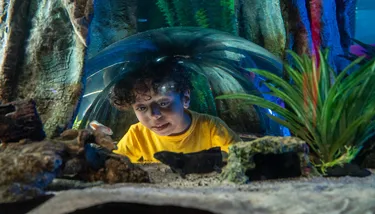
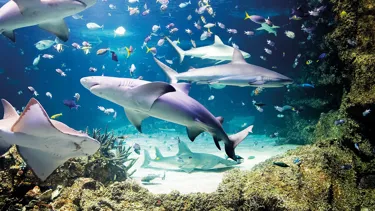
And it couldn’t be easier to integrate any ocean-inspired programme of learning with a school trip to one of our 11 SEA LIFE locations either. We offer self-guided tours or tailored school workshops that complement classroom learning with on-site activities. Whatever itinerary you choose, students can come face-to-face with sharks, manta rays and turtles, walk through the Amazon rainforest and wander wide-eyed through underwater tunnels, for a truly immersive learning experience.
Love the idea but not sure where to start?
Here are five ocean-themed projects and teaching ideas for hands-on, creative and visual activities to bring them to life.
1. Ocean Dwellers
Did you know there are approximately 242,000 known marine species living in our oceans?
Or that creatures like sea pigs, sea cucumbers and even Dumbo octopuses, live at depths up of to 20,000ft below the surface?
Amazing, isn’t it.
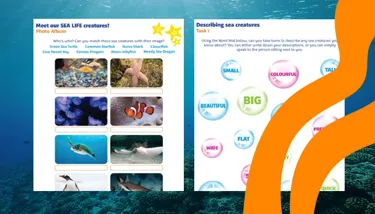
Your students will be blown away by all the incredible facts there are to share about our ocean’s inhabitants – making this a brilliant jumping off point for a cross-curricular deep dive, with a bunch of free SEA LIFE resources for teachers to help you get started with lesson planning. One lesson plan example could see you challenge students to identify some of the ocean’s most famous inhabitants [Science] – testing out their skills with our SEA LIFE ‘Creature Features’ mix and match photo album.
Or ask them to put pen to paper, describing which is their favourite underwater inhabitant and why [English] using our SEA LIFE ocean-inspired word mat for inspiration.
Or perhaps explore what makes up creatures’ habitats and underwater environments [Science & Geography] using our ‘Creature Needs’ activity. This encourages younger students to think about what makes the different elements of their own home, and how this compares to those colourful ocean critters.
2. Ocean Explorers
From Captain Cook to Jacques Cousteau, so many famous explorers have travelled the world’s oceans, surviving storms and giant swells, battling sea creatures (and each other) and uncovering new lands.
Full of excitement and adventure, an Ocean Explorers project has so much to engage younger students, alongside endless material for a range of cross-curricular activities.
Ask students to use an Atlas to trace exploration routes, labelling different oceans and continents along the way [Geography]; turn those routes into old explorer maps using tea to age your paper [Art]; and ask them to imagine their own adventure at sea and what they might encounter along the way, capturing their ideas in diary entries or letters scrawled ‘from the deck of a ship’ [English Lit].
3. Coastal Communities
Our oceans aren’t only home to some fascinating wildlife.
Some 748 million people live within 5km of a coastline, with many communities deeply connected to the ocean, via traditions, leisure or livelihood.
This can be another great launchpad for ocean-themed learning in KS1 and KS2, encouraging students to make broader connections and understand their own relationship with our oceans too.
They could compare what life may have been like in a seaside town 100 years versus today [History]; trawl through old photographs, postcards or even census data to understand evolving demographics [Maths]; and map out the different sectors and industries reliant on the ocean, from fishing to tourism [Geography].
With our A Trip Around the World resource they can even compare coastal living with other human and animal habitats, from rainforests to deserts and bustling cities. Get them to think how each is different and how each contrasts with their own environment too.
4. Conservation Connections
Even younger students will have some grasp on the growing threat to our oceans.
They may have caught glimpses of new stories or even quizzed a parent on plastics and ocean pollution after spotting rubbish strewn across a beach on holiday.
Build on this, by theming work around the concept of conservation and nudging students to draw connections between their own behaviours and the risks facing our oceans.
You can really get creative here. Assembly ideas could include a big picture look at what’s having such a negative impact on the oceans, with lots of chances to ask questions.
Then, in a smaller classroom perhaps explore plastics and how they end up causing harm [Science]; take a high-level look at over-fishing and how this might be impacting different populations of sea creatures [Maths & Geography]; and help them understand too how climate change might be having an impact on weather, waves and tides [Geography.]
5. Ocean Protectors
Build on your students’ passion about all they’ve learned and challenge them to think about how they can become one of our ocean’s protectors, developing knowledge, empathy and global citizenship.
Explore the ways in various campaign groups and activists have tried to get their message out there and ask students what they think worked and what didn’t [Media / critical thinking] before turning your classroom into a conservation HQ using SEA LIFE’S free Join the Mission lesson planning toolkit.
Our teacher guides cover everything you need to get students engaged with simple day-to-day actions. They could create own school recycling plan – complete with posters, leaflets and factsheets to get fellow students on board; execute their own school campaign on why we need to protect our oceans; and even organise a waterway or beach clean nearby – a great outdoor teaching idea.

So colourful, creative and captivating, using oceans as a lens for cross-curricular themed projects can be a wonderful way to engage KS1&2 students.
And whatever approach you choose, a school trip to one of our SEA LIFE locations can really cement student’s knowledge outside of the classroom, and their sense of wonder about our world’s most precious resource.
Related blogs

Ocean Conservation: Why Little Splashers Make Big Waves
Active citizenship might sound like something only MPs do, but for kids, it’s all about turning empathy into action. That’s where SEA LIFE’s Friends of the Sea initiative comes in. Think of it as a superhero training camp, minus the capes (although, who am I to stop you?)
Related blog posts
Oceans at COP30 + engaging activities to dive into
For teachers, COP30 is a good way to connect global policy to the classroom, showing students that protecting the ocean isn’t just about wildlife, it’s about climate, people, and our shared future.
Related blog posts
How a School Aquarium Trip Can Help Students Feel Calm
It’s no secret that the wellbeing of our children has taken a hit in recent years. From pandemic disruptions to the ever insisting presence of social media, young people face a barrage of pressures previous generations could never have imagined. However, what if there was a way to make learning about wellbeing fun, engaging, and memorable? Enter the humble aquarium trip!
Related blog posts
Dive into Learning: How Aquarium Trips Inspire Knowledge, Empathy, and Love for the Ocean
Planning a geography or science school trip can be a lot of work, but watching a child’s eyes light up when they enter an aquarium is a joy to behold. It’s a journey into the ocean’s mysteries, a chance to inspire empathy, and an opportunity to show students how interconnected our world truly is.
Related blog posts