Dive Into Action: Oceans and Earth Day in the Classroom
- Tuesday 21st April 2026
- Activities and Teaching Ideas, Topical Teaching, KS1, KS2, KS3
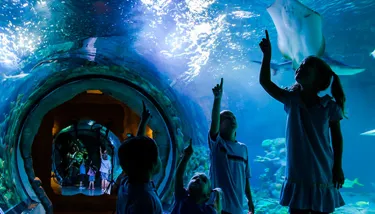
Did you know the ocean produces over half of the oxygen we breathe? It is also a gateway to understanding how our planet works, helping us learn about weather, climate, and the amazing variety of life on Earth. From tiny plankton to enormous whales, the ocean is full of living things that are all connected, showing us how ecosystems depend on each other to stay healthy. It also helps control our temperature by absorbing heat from the sun, which keeps our planet from getting too hot or too cold. For young learners, exploring the ocean can spark curiosity about science, geography, and caring for the environment, reminding us that by protecting our seas, we are also protecting our own future.
Ocean-themed learning can easily become part of everyday lessons by linking it to existing topics across subjects. In science, explore temperature, habitats, and food chains using oceans as examples; in maths, graph data from simple experiments like water vs. land heating or classroom waste tracking; in literacy, write from the perspective of ocean creatures or report on citizen science observations; in art and design, create ocean-inspired projects or eco-friendly inventions. Small, recurring activities - like weekly “Plastic Patrols” or data collection - reinforce environmental stewardship while keeping learning hands-on and cross-curricular.
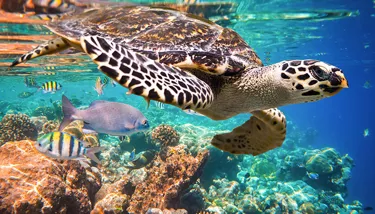
Bring these four themes into your everyday teaching to reinforce why the Ocean is so important to the health of our planet.
The Ocean as Earth’s Climate Regulator
Oceans cover 70% of the Earth’s surface and act like a giant thermostat, absorbing heat and carbon dioxide to keep our planet’s climate balanced. Learning ocean science isn’t just academic - it’s crucial for climate action.
Share how the ocean controls temperature and absorbs carbon with these activities:
- KS1: “Ocean and Sun” Shadow Experiment
Demonstrate how water heats slower than land using a bowl of water and sand or soil in another, a lamp and thermometer. Discuss why oceans keep Earth’s temperature balanced. - KS2: “Carbon Absorber” Model
Use soda water (carbon dioxide) and plants or algae in jars to demonstrate how the ocean absorbs CO₂. Track bubbles over time to show absorption. - KS3: Temperature Tracker Graphing
Students compare temperature changes in water vs. land in small containers over a week. Graph results to visualize climate regulation.
Linking with your everyday lessons: Ocean experiments, like comparing how water and land heat up, can be integrated into science units on weather, states of matter, or energy. Temperature data can also be graphed in maths lessons, while literacy lessons can include creative writing from the perspective of ocean water, helping students link everyday topics to climate concepts without adding extra lessons.
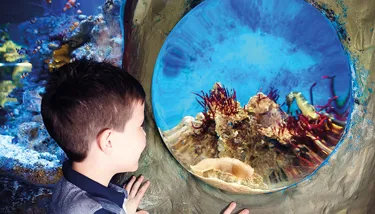
Biodiversity and Ecosystem Health
Oceans are home to millions of species. Healthy ecosystems keep the planet balanced, providing food, oxygen, and protection from natural disasters.
Explore ocean life and the importance of balance:
- KS1: “Ocean Animal Match”
Use picture cards of fish, coral, sharks, etc., and have children match predators, prey, and habitats to understand food chains. - KS2: Coral Reef in a Jar
Create a small ecosystem with sand, shells, water, and plastic “coral” or safe live plants. Discuss species interdependence. - KS3: Habitat Impact Investigation
Show videos of healthy vs. damaged reefs or mangroves. Students create cause-and-effect diagrams linking pollution or overfishing to species decline.
Linking with your everyday lessons: Exploring ocean habitats and food chains fits naturally into science units on ecosystems and life cycles. Art lessons can incorporate drawing or crafting ocean animals, and literacy or geography lessons can include ocean-themed stories and research projects, letting students build knowledge across subjects while observing patterns in ecosystems.
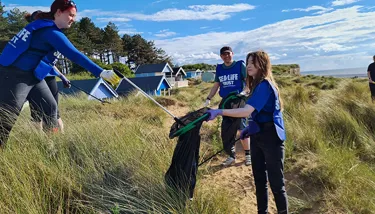
Human Impact and Stewardship
Every piece of plastic or pollution affects ocean life. Teaching stewardship helps students understand their role in protecting the planet.
Encourage awareness and shared responsibility in protecting oceans:
- KS1: Beach Clean Simulation
Scatter “trash” (paper, small wrappers) in a sandbox or playground. Students pick up items and sort recyclable vs. non-recyclable. Discuss why plastic harms ocean life. - KS2: Plastic Footprint Calculator
Track items used in a week (bottles, bags, straws) and discuss alternatives. Students could make posters showing actions to reduce waste. - KS3: Oil Spill Experiment
Use vegetable oil, water, and small plastic toys to simulate an oil spill. Students explore cleanup methods (cotton, spoons, absorbent pads) and discuss environmental consequences.
Linking with your everyday lessons: Activities like beach clean simulations, plastic tracking, and eco-friendly design projects can be woven into PSHE discussions about responsibility, maths lessons on data collection and graphing, and design & technology lessons on sustainable solutions. Weekly routines, like “Plastic Patrols,” make environmental stewardship a simple, recurring part of classroom life.
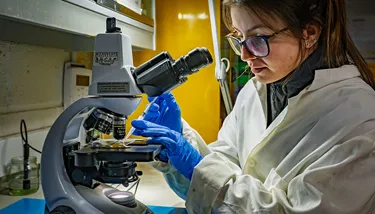
Citizen Science and Learning Opportunities
Students can contribute to real research, making science meaningful and exciting. Engaging with ocean science is also a tangible way to celebrate topical days such as Earth Day and Earth Hour.
- KS1: Ocean Observation Journal
Students draw or write about seashells, rocks, or plastic found near water bodies and record observations to notice patterns. - KS2: Plastic Pollution Survey
Collect litter around school grounds or local waterways. Enter data into an online platform like Marine Conservation Society’s Beachwatch. - KS3: Ocean Temperature and Wildlife Tracking
Participate in projects, where students record observations of local or marine species and contribute to real scientific databases.
Linking with your everyday lessons: Citizen science projects, such as local species or litter surveys, can be incorporated into science and geography lessons as real-world investigations. ICT lessons can focus on data entry and analysis, while English lessons can involve reporting findings through presentations, newsletters, or blogs, allowing students to connect classroom skills to genuine scientific contributions.
Explore more teaching ideas & free resources →