Ask Your Class: Shark Awareness Day
- Friday 10th July 2026
- Topical Teaching, Activities and Teaching Ideas
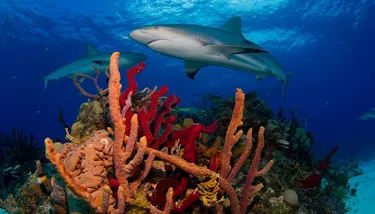
When pupils think of sharks, they often picture dramatic movie scenes, sharp teeth and fearsome predators. But the reality is much more fascinating. Sharks are one of the ocean's most important animals, helping to keep marine ecosystems healthy and balanced. They have existed for millions of years, survived multiple mass extinctions and continue to play a vital role in ocean biodiversity.
Shark Awareness Day, celebrated each year on 14 July, provides an excellent opportunity to challenge misconceptions, inspire curiosity and bring real-world conservation issues into the classroom. Like many awareness days, it offers a relevant and engaging hook that can help pupils connect their learning to the wider world.
The beauty of Shark Awareness Day is that it doesn't require teachers to set aside an entire day of learning. Instead, it can be woven naturally into existing lessons and curriculum topics:
- Science: Explore food webs, habitats, adaptation and conservation.
- Geography: Investigate oceans, ecosystems and the impact of human activity on the environment.
- English: Develop persuasive writing, debate and non-fiction research skills.
- PSHE and Citizenship: Discuss sustainability, responsibility and how individual actions can help protect wildlife.
- Art and Design: Create posters, campaigns and shark-inspired artwork.
Whether you have 15 minutes or a full lesson available, Shark Awareness Day can act as a simple but meaningful teaching moment that sparks discussion and encourages pupils to think critically about the natural world.
Here Are Our Challenge Questions for Your Class This Shark Awareness Day
Each activity is built around a big question designed to encourage curiosity, investigation and discussion:
- KS1: How Can a Shark Swim So Fast?
- KS2: Are Sharks Really as Scary as People Think?
- KS3: What Happens if Sharks Disappear from the Ocean?
- KS4: Should Shark Fishing Be Banned?
From exploring animal adaptations to debating complex conservation issues, these questions provide an engaging starting point for learning whilst linking directly to key curriculum themes across every stage of education. By the end of the lesson, pupils won't just know more about sharks, they'll have a deeper understanding of the important role they play in our oceans and why protecting them matters.
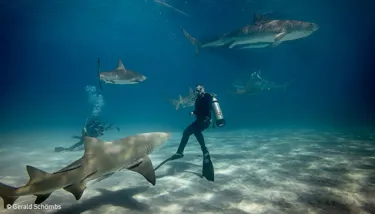
KS1: How Can a Shark Swim So Fast?
Activity 15–20 mins
Turn pupils into "junior shark scientists" as they investigate what makes sharks such excellent swimmers.
- Ask children to look at pictures of different sharks and spot features they all have.
- Explore how fins help with steering, tails help with movement, and streamlined bodies help sharks move through water.
- Children act out being sharks, swimming around the classroom and testing different movements.
- Finish by designing their own "super swimmer" shark and labelling its body parts.
Learning Focus
- Identifying and naming animal body parts
- Understanding simple adaptations
- Observing similarities and differences between animals
- Developing speaking, listening and creative skills
Why it Works
Starting with a simple question immediately sparks curiosity and encourages pupils to investigate rather than just learn facts. It also naturally leads to active play, observation and discussion, making complex scientific ideas accessible for younger learners.
Fit Your Existing Curriculum
Perfect for the end of a science lesson, as a morning activity, or as part of a wider topic on animals.
KS2: Are sharks really as scary as people think?
Activity 20–30 mins
Challenge pupils to investigate common beliefs about sharks. Present statements such as:
- All sharks are dangerous to humans.
- Sharks must keep swimming all the time.
- Sharks have lived longer than dinosaurs.
- Sharks are important for healthy oceans.
Working in groups, pupils research the claims and create:
- A fact file
- An informative poster
- A short presentation or podcast
The class can then vote on which myth surprised them most.
Learning Focus
- Science: Living things and habitats
- English: Research and non-fiction writing
- Digital literacy and presentation skills
Why it Works
This inquiry-based lesson encourages pupils to think like scientists and researchers. It develops critical thinking while helping children challenge misconceptions and build a more accurate understanding of marine life.
Fit Your Existing Curriculum
Add it as a guided reading lesson, literacy starter, or science enquiry.
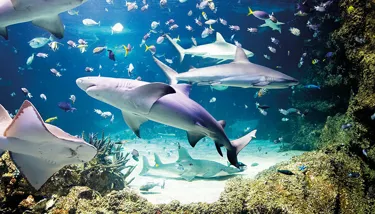
KS3: What happens if sharks disappear from the ocean?
Activity 30 mins
Students investigate the role of sharks as apex predators within marine ecosystems.
- Provide a marine food web including sharks, fish, seals, turtles and plankton.
- Ask students to trace energy flow through the ecosystem.
- Introduce a scenario where shark populations decline significantly.
- Students predict and discuss the cascading impacts throughout the food web.
- Conclude with groups creating an infographic showing the consequences.
Learning Focus
- Ecosystems and interdependence
- Food webs and biodiversity
- Systems thinking
- Environmental change and conservation
Why it Works
Like the penguin food-web investigation, this activity moves beyond individual species and helps students understand the interconnected nature of ecosystems. It encourages analytical thinking and real-world environmental awareness.
Fit Your Existing Curriculum
Slots naturally into Biology, Geography or Environmental Science schemes of work as a case study.
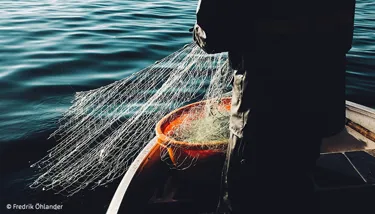
KS4: Should Shark Fishing Be Banned?
Activity 30–40 mins
Students explore the complex balance between conservation, livelihoods and sustainable resource management.
Assign groups different stakeholder perspectives:
- Marine conservation charities
- Commercial fishing industries
- Coastal communities
- Governments and policymakers
- Marine scientists
Students research their viewpoint before taking part in:
- A formal debate
- A mock government inquiry
- An extended GCSE-style evaluative essay
Learning Focus
- GCSE Biology and Geography
- Human impacts on ecosystems
- Sustainability and resource management
- Debate, evaluation and evidence-based argument
Why it Works
This lesson develops higher-order thinking by encouraging students to consider multiple perspectives on a real environmental challenge. It strengthens communication and analytical skills whilst linking directly to contemporary conservation issues. Similar to the blog's debate-based activities, it promotes informed citizenship and critical discussion.
Fit Your Existing Curriculum
Functions well as a GCSE-style skills activity, requiring little more than a one-page briefing sheet.
The best lessons start with a great question. That's why our Ask Your Class... series takes key wildlife and environmental awareness days and turns them into thought-provoking, curriculum-linked challenge questions for every key stage. Whether you have 15 minutes or a full lesson, these questions are designed to spark curiosity, discussion and deeper thinking about the natural world.
Explore more lessons ideas inspired by the ocean →Related blogs

Why Penguins Should Take Over Your Classroom This January
Penguins have a way of capturing students’ attention like few other animals can. From their waddling walk to their remarkable survival skills, penguins spark curiosity, empathy, and endless questions. Want to make your lessons more engaging with penguins? Here’s how…
Related blog posts
Dive Into Action: Oceans and Earth Day in the Classroom
From quick classroom tasks to creative projects, explore how ocean themes can enrich everyday lessons while building curiosity about the world around us.
Related blog posts
Creative, captivating and colourful: Ocean-inspired learning for KS1&2
The world’s oceans are full of hidden depths when it comes to cross-curricular learning for KS1&2 teachers. Here are five ideas for ocean-themed projects – and how to integrate them into the classroom.
Related blog posts
Ocean Conservation: Why Little Splashers Make Big Waves
Active citizenship might sound like something only MPs do, but for kids, it’s all about turning empathy into action. That’s where SEA LIFE’s Friends of the Sea initiative comes in. Think of it as a superhero training camp, minus the capes (although, who am I to stop you?)
Related blog posts