Helping Freshwater Species
SEA LIFE is dedicated to protecting freshwater species across the globe. From breeding endangered native fish in Australia to restoring habitats and engaging local communities, SEA LIFE works with partners worldwide to safeguard vital freshwater ecosystems and the unique species that call them home.

Breeding the Southern Pygmy Perch
Following a dramatic decline in numbers over the past two decades, the Southern Pygmy Perch – a small species of native, freshwater fish are now listed as Endangered in NSW. The small but mighty, Southern Pygmy Perch plays an important part in the eco-system of freshwater streams and wetlands in South Eastern Australia, and to help drive the recovery of this species, SEA LIFE Sydney Aquarium is proud to launch a recovery program in collaboration with the NSW Department of Primary Industries (DPI) Fisheries.
The program aims to establish breeding populations of Southern Pygmy Perch at SEA LIFE Sydney Aquarium, then raise and release the fish into refuges, creating new populations and boosting the number and genetic diversity of existing populations of this species.
Find out more

Rescuing Crayfish
White-clawed crayfish is an endangered native UK species under threat from the invasive USA signal crayfish (Pacifastacus leniusculus).
Our team at the National SEA LIFE Birmingham, have partnered with the Environment Agency, Staffordshire Wildlife Trust and Natural England to produce the Midlands’ first licenced crayfish hatchery for white-clawed crayfish. In 2024, 100 rescued creatures deemed at too high-risk from invasive species, were transferred to our ARK site (a home away from the threat) until a new home is found in 2025
Saving the Macquarie Perch
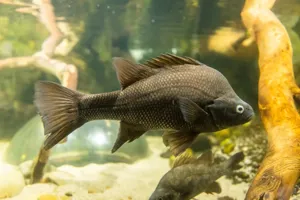
Macquarie Perch, once widespread in the Murray-Darling system, are now nationally endangered, with only a few self-sustaining wild populations remaining. To support their recovery, SEA LIFE Melbourne and Fisheries are partnering on a project that combines habitat restoration, breeding, restocking, and community engagement. Efforts include improving breeding at Snobs Creek hatchery and releasing fish into bushfire-affected rivers like the Buffalo, King, and Cudgewa. The initiative also involves local communities, Landcare groups, Traditional Owners, and angling clubs to help restore and protect this vital native species.
Find out more

Native Whitefish Headstarting
Headstarting is a conservation technique where vulnerable juvenile animals are raised in a protected environment during their most at-risk early life stages, then released into the wild once strong enough to survive independently.
In 2025, SEA LIFE Konstanz strengthened its partnership with a fish hatchery on Reichenau Island to protect the declining native whitefish of Lake Constance. By providing manpower, technical expertise, and a safe space within the aquarium, the team supports breeding and raises juvenile whitefish until they are ready to be released into the lake to help boost wild populations.
Beyond breeding, the aquarium also educates visitors about the ecological importance of whitefish, the challenges they face, and the impact of human activity on freshwater ecosystems, contributing to conservation through education, habitat restoration, and research.
Find out more

Protecting the Paddlefish in Missouri
Saving the Endangered Zombie Fish
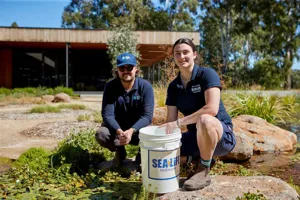
SEA LIFE Melbourne Aquarium, in partnership with the North Central Catchment Management Authority (CMA), has released rainbowfish and 13 southern purple spotted gudgeon—also known as Zombie fish—into Victorian waterways. This marks the third species successfully bred and reintroduced through the collaboration, which provides vital support like brood stock and habitat selection. The aquarium remains dedicated to conserving endangered freshwater species, including the olive perchlet, aiming to protect Australia’s aquatic ecosystems through ongoing efforts and partnerships.
Find out more

Advancing Conservation of the Spotted Barbel
At SEA LIFE COEX Aquarium, we are committed to protecting Korea’s freshwater biodiversity, with a strong focus on the Spotted Barbel (Hemibarbus mylodon), a species of significant ecological and cultural importance. Working in partnership with the National Institute of Inland Fisheries of Korea, we contribute to national conservation efforts through research and collaboration. Since welcoming 198 juvenile fish in 2024, our work has focused on understanding breeding behaviour, recreating natural spawning conditions, and sharing this story with visitors to raise awareness.
Although the species has not yet reached full maturity, this ongoing research is helping to build vital knowledge to support future conservation and habitat restoration. Through science, collaboration, and public engagement, we are helping to secure a future for this important freshwater species.

Insitu Conservation of Pseudorasbora pugnax
At SEA LIFE Nagoya, we are proud to support the conservation of Pseudorasbora pugnax, a critically endangered species endemic to the Aichi, Gifu, and Mie regions.
Working alongside the Prefectural Environmental Protection Agency and the Ushimotsugo Protection Society, we contribute to habitat preservation and population research, while preparing for future rescue, breeding, and release initiatives. Through strong partnerships, we combine conservation action with visitor education, raising awareness of this unique species and the urgent need to protect local biodiversity.
Collaborating with organisations including the Gifu Prefecture Environmental Protection Agency, local NPOs, and the Gifu World Freshwater Aquarium, we are committed to safeguarding this species for the future.
Through research, education, and collaboration, we are helping ensure that future generations can continue to value and protect this important part of Japan’s natural heritage.
Amphibian Conservation Work
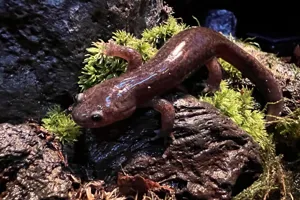
We also work in freshwater environments to protect the most threatened vertebrate class, amphibians! We are working with partners at Speyer and Oberhausen SEA LIFE, Germany, to breed threatened species, such as the Patzcuaro cross-toothed newt (Ambystoma dumerilii) and Titicaca water frog (Telmatobius coleus), which are both extinct in the wild, for an ARK site (a new home away from the threat and future population recovery). We are working with further partners to help in the field on populations of fire salamanders (Salamandra salamandra) and great crested newts (Triturus cristatus) to help in the fight against the fungal pathogen, Batrachochytrium salamandrivorans (Bsal).

Conservation Pond - A World of Biodiversity
At SEA LIFE Porto, we are developing a freshwater conservation pond in collaboration with the local authorities, University of Porto and the SEA LIFE TRUST.
This project promotes the conservation of freshwater habitats and provides new habitats for native species settlement to reduce biodiversity loss. We provide regular talks on the project to school groups in our hatchery area to encourage awareness among the local community.
Our latest news
Dive in and discover our latest news, stories and fun facts from all around the globe!
Dive in
