Dive into the world of jellyfish
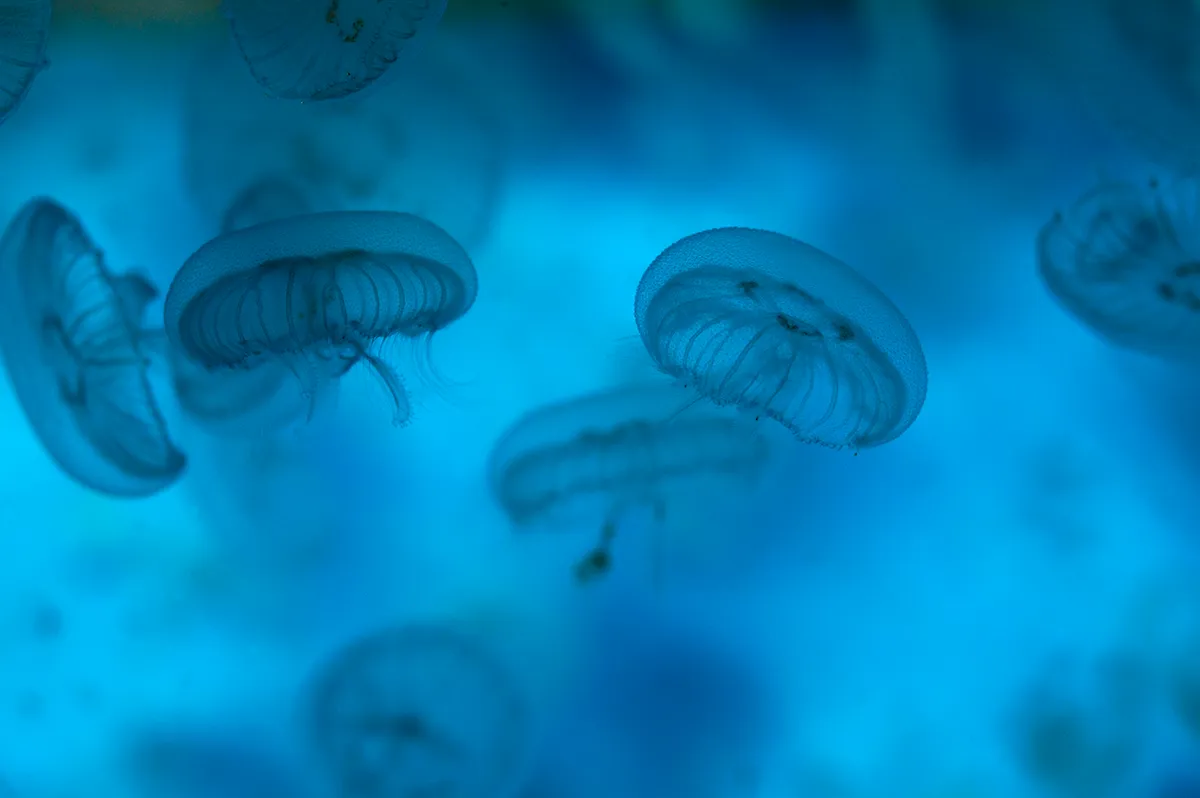
Since 2024, the world of jellyfish awaits you at the end of the exhibition.
Cnidarians and their venom
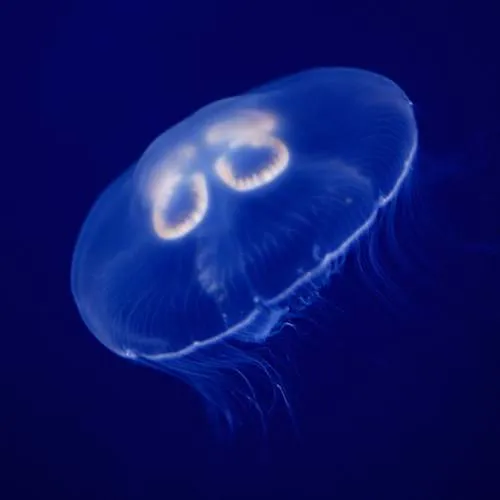
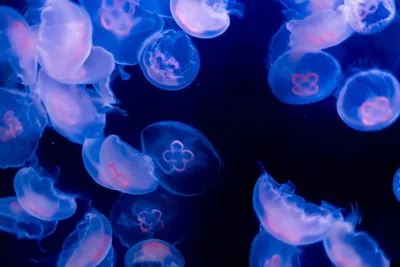
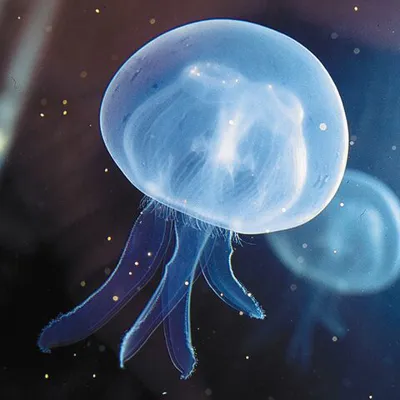
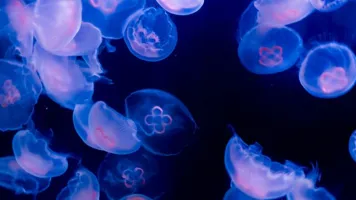
Jellyfish have been drifting through the waters for over five hundred million years. They have been little researched and are therefore considered ‘mystical’ underwater creatures. Jellyfish belong to the cnidarians and consist mainly of water and collagen, a fibrous protein. By contracting their umbrella-like bodies, they expel water downwards and move forward using this recoil principle. Jellyfish can travel at speeds of around 10 kilometres per hour.
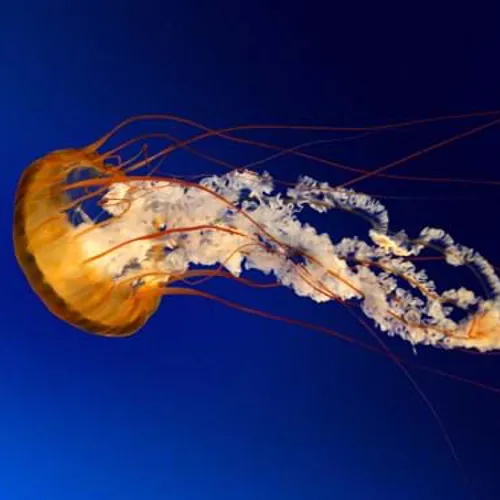
They use their tentacles, which are equipped with stinging cells, to hunt small fish and crustaceans. If these stinging cells come into contact with their prey, they release a paralysing venom at lightning speed to kill or stun it. The most poisonous species of jellyfish is the sea wasp. Collision with this jellyfish can be life-threatening for humans. Fortunately, most other species of jellyfish are poisonous, but far less so than the sea wasp, which is only found off the Australian coast.
The amazing life cycle
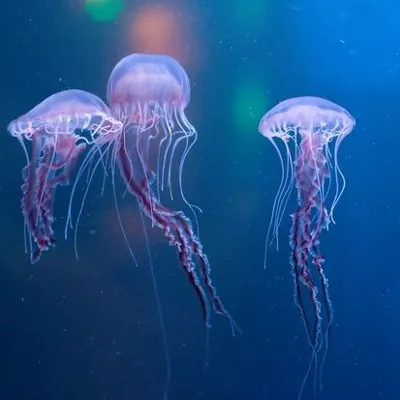
Jellyfish go through a fascinating life cycle that comprises several stages. It all starts with tiny eggs released by a female jellyfish. These eggs develop into larvae called ‘planula’. The planula drift in the water until they settle on a solid substrate and grow into so-called polyps.
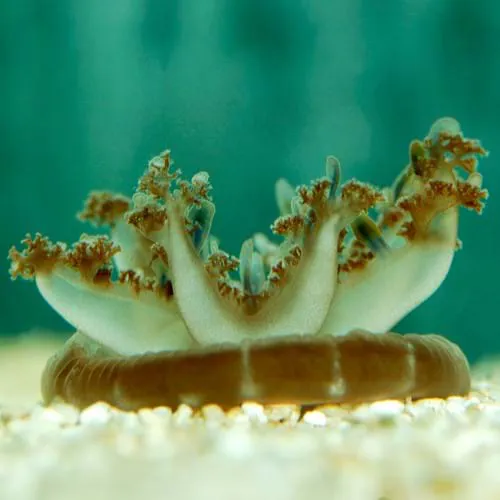
The polyps look like small tubes and adhere to the sea floor. During this phase, the polyps reproduce by budding, creating genetically identical clones. After a certain amount of time, the polyp turns itself inside out and forms a sack-like structure called an ephyra.
The ephyra eventually develops into a fully grown jellyfish. This fully developed jellyfish swims freely in the water and continues the cycle by releasing eggs or sperm to give new planulae the starting point for their lives. The jellyfish life cycle is therefore an amazing cycle that includes both firmly anchored polyps and free-swimming medusae.
Adaptable and few natural enemies
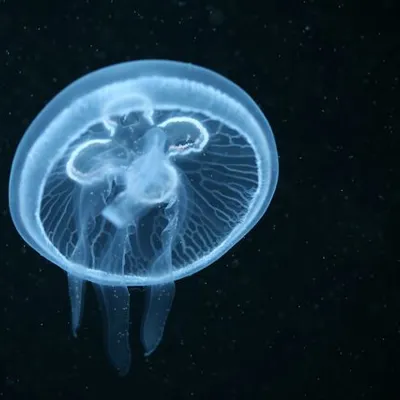
Jellyfish are often considered a ‘plague’ because unfavourable currents wash them ashore in large numbers. There are various reasons for these mass proliferations:
Jellyfish are more adaptable than fish and can cope better with fluctuations in the oxygen content of the water. The jellyfish's food source, plankton, is also growing at an ever-increasing rate. According to BUND, the cause is the over-thinning of coastal seas.
https://www.bund.net/meere/belastungen/ueberduengung-der-meere/
In addition, with declining fish stocks, competition for food and predators of jellyfish are becoming increasingly scarce. Sea turtles and swordfish, on the other hand, are happy about jellyfish: for them, the cnidarians are a delicacy!
Making Of - Jellyfish Tank
The New Wave team captured exciting impressions of the renovation work! The large jellyfish roundabout weighs over a tonne! A challenge for the whole team, but see for yourself!