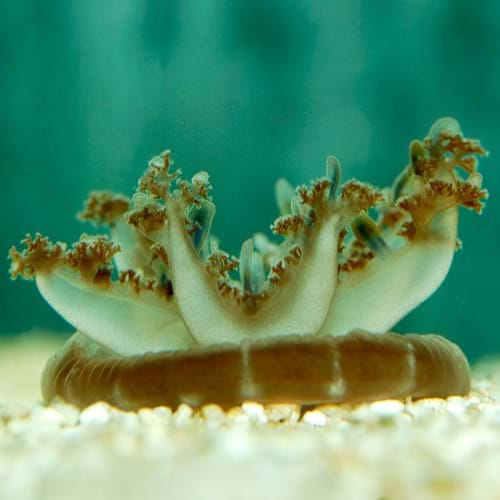
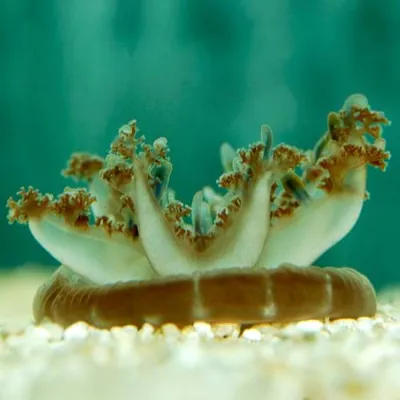
Up Side Down - The jellyfish is upside down
As their name suggests, mangrove jellyfish (Cassiopea) are found worldwide in the shallow, coastal waters of mangrove forests, where they typically settle in large groups on sandy or seagrass beds.
Unlike other jellyfish species, the mangrove jellyfish settles firmly in a specific location on the sea floor and does not drift around. It looks as if it is standing on its head because it directs its tentacles towards the sunlight.
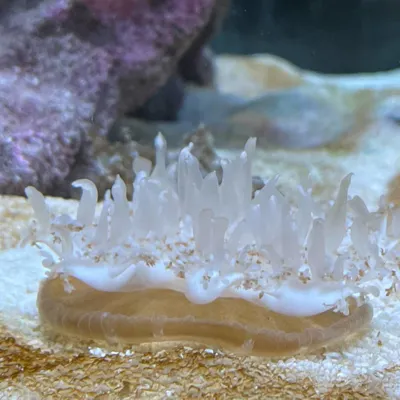
Hunting with slime grenades
Mangrove jellyfish can release mucus (their stinging cells) into open water to protect themselves from predators. This allows the animals to defend themselves without direct physical contact with their enemies.
For a long time, however, no one could really explain how their ‘mucus’ works. Only a new study provides answers – and can explain why divers often report skin irritation from jellyfish, even if they have not touched them.
