Epaulette Sharks: Meet Ellie, the Shark That Can Walk
- Friday September 25th 2026
- Author: Matt Meyers
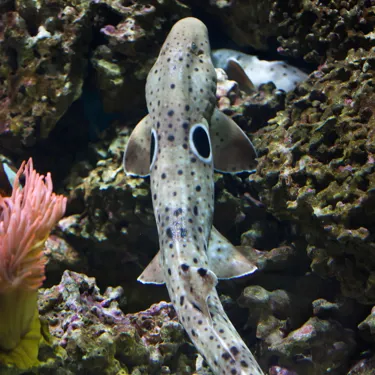
What if we told you there is a shark that can walk?
It sounds like something from a science fiction movie, but it is completely real. The epaulette shark is a small reef dwelling shark with an unusual ability to move across the ocean floor using its fins. At SEA LIFE Orlando Aquarium, guests can meet Ellie, an epaulette shark and one of the aquarium's most fascinating residents.
Epaulette sharks are unlike the sharks many people imagine when they hear the word “shark.” They are relatively small, spend much of their time close to the seafloor and are specially adapted to life in warm, shallow reef environments.
Ellie gives guests a chance to see these remarkable adaptations up close while learning more about sharks and the important role they play in ocean ecosystems.
SEA LIFE Orlando features thousands of marine animals across more than nine interactive exhibits, including Florida's only 360 degree ocean tunnel. The aquarium's shark collection gives families another opportunity to discover how different shark species can be, from bonnethead sharks and zebra sharks to bamboo sharks, coral catsharks and Ellie the epaulette shark.
What Is an Epaulette Shark?
The epaulette shark, scientifically known as Hemiscyllium ocellatum, is a type of carpet shark found naturally in the western Pacific Ocean.
The species gets its memorable name from the large dark markings located behind its pectoral fins. These markings can look a little like eyes and are sometimes described as an adaptation that may help confuse or discourage predators.
That is one of the first things to look for when you meet Ellie.
Epaulette sharks also have a long, slender body, a short rounded snout and broad pectoral and pelvic fins. Those fins are particularly important because they allow the shark to move across reef surfaces in a walking or crawling motion.
While an epaulette shark can swim like other sharks, its unusual walking ability is what makes this species especially interesting.
Can Epaulette Sharks Really Walk?
Yes.
Rather than relying entirely on swimming, epaulette sharks can use their muscular fins to push and lift their bodies across the seafloor.
Their movement is sometimes compared to walking because they coordinate their pectoral and pelvic fins with their body movements to crawl across sand, rock and coral.
This adaptation is particularly useful in the shallow reef environments where they live. An epaulette shark may need to navigate around rocks, coral formations and shallow pools while searching for food.
Researchers have found that the species is remarkably well adapted to challenging conditions, including reef areas where water levels and oxygen levels can change with the tides. The Florida Museum of Natural History notes that epaulette sharks can use their fins to move across the bottom and can tolerate periods of very low oxygen.
That makes the epaulette shark one of the best examples of how animals evolve specialized traits to survive in their environments.
Meet Ellie at SEA LIFE Orlando Aquarium
Ellie is SEA LIFE Orlando Aquarium's resident epaulette shark.
For guests, seeing Ellie is an opportunity to look beyond the traditional image of a shark and discover just how diverse sharks can be.
Instead of imagining a large shark cruising through the open ocean, look closely at the habitat and watch for a smaller shark moving near the bottom. Ellie may be resting, swimming or using her fins to move along the sandy area of her environment.
Her distinctive markings are another feature to watch for.
The large spots behind her pectoral fins are among the easiest ways to recognize an epaulette shark. These markings are called ocelli and are one of the species' most recognizable features.
For children especially, Ellie can turn a visit to the aquarium into a memorable science lesson. The question “How can a shark walk?” naturally leads to conversations about animal adaptations, habitats, movement and survival.
SEA LIFE Orlando also offers educational resources focused specifically on epaulette sharks, giving students and families another way to learn about this unusual species.
Where Do Epaulette Sharks Live?
Epaulette sharks are native to the warm waters of the western Pacific.
Their natural range includes northern Australia and New Guinea, with the Great Barrier Reef being an important part of their habitat. They are associated with shallow coral reefs, reef flats, sandy areas and tidal pools.
Unlike some shark species that spend much of their time swimming through open water, epaulette sharks are closely associated with the seafloor.
They can live in remarkably shallow water. In some places, they may be found in tidal pools or reef areas where the water becomes very shallow as the tide changes.
Here is a quick look at where you can find epaulette sharks.
|
Location |
Epaulette Sharks |
|
Northern Australia |
Native range |
|
Great Barrier Reef |
Important natural habitat |
|
New Guinea |
Native range |
|
Shallow coral reefs |
Preferred habitat |
|
Reef flats and tidal pools |
Common habitat type |
|
Florida's natural coastal waters |
Not a native wild species |
|
SEA LIFE Orlando Aquarium |
Ellie, the resident epaulette shark |
|
Clearwater Marine Aquarium |
Epaulette sharks are also part of its animal collection |
Epaulette sharks are not native to Florida's coastal waters. Their natural distribution is centered around Australia and New Guinea. However, Florida families can see the species in accredited aquarium settings, including SEA LIFE Orlando Aquarium.
Clearwater Marine Aquarium also has epaulette sharks in its collection, providing another Florida opportunity to learn about this fascinating species.
For visitors to Orlando, SEA LIFE offers the chance to see Ellie alongside a much broader collection of marine life from different parts of the world's oceans.
What Do Epaulette Sharks Eat?
Epaulette sharks are hunters, but their diet is very different from the image of a shark chasing large prey through the ocean.
They forage along the seafloor, particularly around reef flats and shallow habitats. Their diet includes small animals that live in or around the reef environment.
|
Food |
How It Fits Into an Epaulette Shark's Diet |
|
Crabs |
An important food source, particularly for adults |
|
Shrimp |
Small crustaceans that can be found around reefs |
|
Worms |
Part of the diet, especially for younger sharks |
|
Small fish |
Another source of animal protein |
|
Other small invertebrates |
Opportunistic prey found around the seafloor |
The Florida Museum of Natural History reports that epaulette sharks eat crustaceans, small fish and polychaete worms. Adults tend to eat more crabs and shrimp, while younger sharks eat more worms and fish.
Epaulette sharks have impressive ways of finding that food.
They can use their sense of smell and electroreception to help locate prey. Electroreception allows sharks to detect weak electrical signals produced by living animals.
When searching for food, an epaulette shark may push its snout into sand or sediment and use suction feeding to capture prey.
That means a shark that looks like it is simply exploring the bottom may actually be searching for its next meal.
Why Do Epaulette Sharks Have Spots That Look Like Eyes?
One of the most recognizable features of an epaulette shark is the large dark spot behind each pectoral fin.
These markings are known as ocelli.
They can look remarkably similar to a pair of large eyes, which is why one popular explanation is that the markings can help make the shark appear larger or confuse potential predators.
The markings are especially noticeable when you look at an epaulette shark from above.
Combined with their slender bodies and small size, the markings give epaulette sharks an appearance that is very different from many other shark species.
When looking for Ellie at SEA LIFE Orlando, these distinctive markings are one of the best clues that you have found the right shark.
Why Do Epaulette Sharks Live in Shallow Water?
Epaulette sharks are specially adapted for life in shallow reef environments.
Their natural habitats can include coral reef flats and tidal pools where the water may become extremely shallow as the tide changes.
For many marine animals, a changing tide can create a difficult environment. For an epaulette shark, however, these conditions are something it is built to handle.
Its ability to move across the bottom means it can navigate areas where traditional swimming would be difficult.
Its ability to tolerate low oxygen conditions is another remarkable adaptation. Research summarized by the Florida Museum of Natural History shows that epaulette sharks can tolerate periods of reduced oxygen without the neurological problems that would affect many other animals.
This is a great example of why seeing an animal in an aquarium can be more than simply looking at an interesting creature. A closer look can reveal how an entire body has evolved around a particular environment.
How Big Do Epaulette Sharks Get?
Epaulette sharks are relatively small compared with many of the shark species people picture when they think of sharks.
The species can reach approximately 107 centimeters, or about 42 inches, in total length. Males reach maturity at a smaller size than the maximum adult length, while females typically mature at a slightly larger size.
Their smaller size, bottom dwelling lifestyle and unusual walking behavior make them particularly interesting to observe.
They are also generally considered docile and are not known as a significant threat to people.
Epaulette Shark vs. Other Sharks at SEA LIFE Orlando
One of the best parts of exploring the shark habitats at SEA LIFE Orlando is discovering that there is no single “typical” shark.
Different species have developed different body shapes, behaviors and feeding strategies based on where they live.
|
Shark at SEA LIFE Orlando |
What Makes It Interesting |
|
Epaulette Shark |
Ellie can use her fins to move along the seafloor |
|
Mario and Luigi are known for being the first shark species identified as omnivorous |
|
|
Young zebra sharks have stripes that develop into spots as they mature |
|
|
These bottom dwelling sharks spend much of their time close to the seafloor |
|
|
Reef associated sharks with distinctive patterns and behaviors |
SEA LIFE Orlando's shark collection includes bonnethead sharks named Mario and Luigi, zebra sharks including Joy, Nebula and Luna, bamboo sharks, coral catsharks and Ellie the epaulette shark. The aquarium's website also identifies blacktip reef sharks among the sharks guests can encounter.
The aquarium's 360 degree Ocean Tunnel provides another memorable way to see marine life from different angles, with sharks, rays, fish and sea turtles swimming around visitors.
What Makes Ellie So Special?
Ellie represents something that is easy to forget when we think about sharks.
Sharks are not all the same.
Some are built for speed. Some spend much of their time resting on the bottom. Some are reef hunters. Some eat both animal and plant material. And epaulette sharks have evolved the ability to move across the seafloor using their fins.
That makes Ellie an excellent ambassador for shark education.
A visit to see Ellie can help families understand that sharks are an incredibly diverse group of animals with different habitats, diets and adaptations.
It also makes the aquarium experience more interactive for children. Instead of simply asking, “What kind of shark is that?” they can start asking questions such as:
- How does it move?
- Why does it have spots?
- What does it eat?
- Where does it live?
- Why does it stay near the bottom?
Those questions are where curiosity and learning really begin.
Popular Epaulette Shark Questions
Epaulette sharks are a particularly strong topic for people wondering unusual shark facts. Below reflects common questions around the species and are useful starting points for anyone who wants to learn more.
|
Topic |
What People Want to Know |
|
What is an epaulette shark? |
Basic information about the species |
|
Where do epaulette sharks live? |
Natural range and habitat |
|
Can epaulette sharks walk? |
How their unusual movement works |
|
What do epaulette sharks eat? |
Diet and feeding behavior |
|
Are epaulette sharks dangerous? |
Temperament and interactions with people |
|
How big do epaulette sharks get? |
Adult size and growth |
|
Why do epaulette sharks have spots? |
The purpose of their eye like markings |
|
What do epaulette sharks look like? |
Identification and physical features |
|
Are epaulette sharks found in Florida? |
Whether they live naturally in Florida waters |
|
Where can I see an epaulette shark in Florida? |
Aquarium and animal encounter searches |
|
What sharks are at SEA LIFE Orlando? |
Shark species visitors can see |
|
What is the walking shark? |
The popular nickname connected with epaulette sharks |
See Ellie and Discover More Sharks in Orlando
The next time you visit SEA LIFE Orlando Aquarium, take a closer look at the sharks.
Look for Ellie and her distinctive markings. Watch how she moves. Think about the warm shallow reefs where epaulette sharks live in the wild and the remarkable adaptations that help them survive there.
Then explore the other sharks throughout the aquarium and see how different each species can be.
SEA LIFE Orlando is home to more than 5,000 creatures across its exhibits, giving families plenty of opportunities to discover marine life from around the world.
And if you want to go deeper into the world of shark care, SEA LIFE Orlando also offers a Shark Experience as part of its behind the scenes offerings. The experience gives guests an opportunity to learn more about shark care and see how aquarists work with these animals.
Whether you are visiting with young shark fans, planning a family day in Orlando or simply curious about one of the ocean's most unusual animals, Ellie is worth looking for.
Because sometimes the most fascinating shark in the aquarium is not the biggest one.
Sometimes, it is the one that can walk.
Frequently Asked Questions About Epaulette Sharks
An epaulette shark is a small carpet shark native to the warm waters around northern Australia and New Guinea. It is known for large eye like markings behind its pectoral fins and its unusual ability to move across the seafloor using its fins.
Yes. Epaulette sharks can use their muscular pectoral and pelvic fins to move their bodies across sand, rock and coral. This walking or crawling movement helps them navigate shallow reef habitats and tidal pools.
Epaulette sharks eat small marine animals including crabs, shrimp, worms and small fish. They forage along reef flats and the seafloor and can use smell and electroreception to help locate prey.
Epaulette sharks are not native to Florida's coastal waters, but the species can be seen in aquarium settings in Florida. SEA LIFE Orlando Aquarium is home to Ellie, its resident epaulette shark. Clearwater Marine Aquarium also has epaulette sharks in its collection.
Epaulette sharks are generally considered docile and are not regarded as a significant threat to people. They are small bottom dwelling sharks adapted to life around shallow coral reefs and tidal pools.
Related blogs
Complete Guide to Sharks in Florida: Species, Migration, and Where to See Them at Aquariums
Florida is one of the best places in the world to learn about sharks. From migrating blacktip sharks along the coastline to colorful reef sharks found inside aquariums, discover Florida shark species, migration patterns, fun facts, and the best places to see sharks—including SEA LIFE Orlando Aquarium at ICON Park.
Related blog posts
Meet the Bamboo Shark at SEA LIFE Orlando: Fun Facts for Kids & Families
Discover fun bamboo shark facts at SEA LIFE Orlando Aquarium! Learn what bamboo sharks eat, where they live, and why they’re featured in the Summer of Sharks event.
Related blog posts
Bonnethead Sharks: Fun Facts About Florida's Friendly Hammerhead Relative
Discover fun bonnethead shark facts at SEA LIFE Orlando Aquarium! Learn where bonnethead sharks live, what they eat, how they're related to hammerheads, and why they're a must-see during Summer of Sharks.
Related blog posts
Zebra Shark Facts: One of the Ocean's Most Beautiful Sharks
Discover amazing zebra shark facts at SEA LIFE Orlando Aquarium! Learn where zebra sharks live, what they eat, why they change spots as they grow, and see them during Summer of Sharks.
Related blog posts
Coral Catsharks: Everything You Need to Know About These Camouflaged Sharks
Discover fascinating coral catshark facts, their unique adaptive camouflage, and how to see them at SEA LIFE Orlando's Summer of Sharks event.
Related blog posts