Complete Guide to Sea Turtles in Florida
- Wednesday August 5th 2026
- Author: Matt Meyers
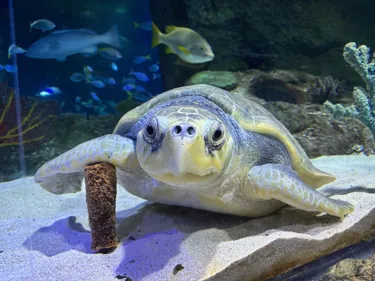
Few wildlife experiences are as memorable as spotting a sea turtle gliding through crystal-clear water or witnessing a hatchling make its first journey toward the Atlantic Ocean. Florida is widely considered one of the most important sea turtle destinations in the world, hosting the largest nesting populations in the continental United States and serving as critical habitat for several endangered species.
Whether you're planning a family vacation, searching for the best places to see sea turtles in Florida, or simply curious about these incredible marine reptiles, this guide covers everything—from the seven sea turtle species, nesting seasons, migration routes, rehabilitation centers, conservation organizations, and the best aquariums to learn about these amazing animals.
Before heading to Florida's beaches, families can begin their underwater adventure at SEA LIFE Orlando Aquarium, where interactive exhibits inspire young ocean explorers to learn about marine conservation and the incredible ecosystems sea turtles call home.
Florida Sea Turtle Facts at a Glance
|
Topic |
Details |
|
Sea turtle species found in Florida |
5 regular species + occasional visitors |
|
Nesting season |
March through October |
|
Peak nesting |
May through July |
|
Hatchling season |
July through October |
|
Florida annual nests |
More than 100,000 (varies annually) |
|
Longest migration |
Over 8,000 miles |
|
Lifespan |
50–100+ years |
|
Conservation status |
Most species are threatened or endangered |
|
Best places to see turtles |
Atlantic Coast, Gulf Coast, aquariums, rehabilitation centers |
Why Florida Is One of the World's Best Places for Sea Turtles
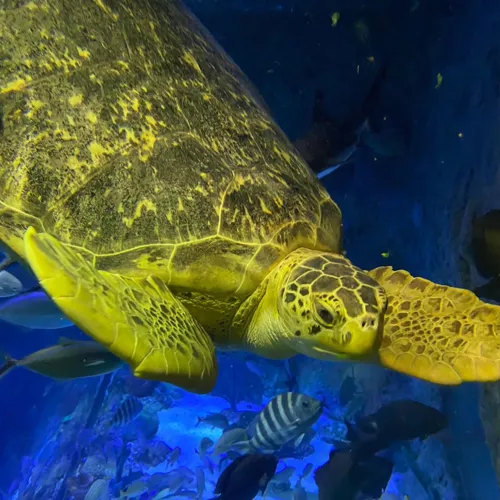
Florida's unique geography gives sea turtles nearly everything they need:
-
Over 1,300 miles of coastline
-
Warm Gulf Stream waters
-
Sandy nesting beaches
-
Extensive seagrass beds
-
Coral reef ecosystems
-
Protected wildlife refuges
-
Marine conservation programs
In fact, Florida supports one of the largest loggerhead sea turtle nesting populations anywhere on Earth.
Every Type of Sea Turtle Found in Florida
Florida is home to five regularly occurring sea turtle species, while two others are extremely rare visitors.
Florida Sea Turtle Species
|
Species |
Scientific Name |
Status |
Common Florida Habitat |
|
Loggerhead |
Caretta caretta |
Threatened |
Statewide |
|
Green Sea Turtle |
Chelonia mydas |
Threatened |
South Florida reefs & seagrass |
|
Leatherback |
Dermochelys coriacea |
Vulnerable |
Atlantic Coast |
|
Kemp's Ridley |
Lepidochelys kempii |
Critically Endangered |
Gulf Coast |
|
Hawksbill |
Eretmochelys imbricata |
Critically Endangered |
Florida Keys |
|
Olive Ridley |
Lepidochelys olivacea |
Rare visitor |
Offshore |
|
Flatback |
Natator depressus |
Not naturally found (Australia only) |
None |
Loggerhead Sea Turtle
The loggerhead is Florida's signature sea turtle and the species most visitors are likely to encounter.
Quick Facts
|
Feature |
Information |
|
Length |
3 feet |
|
Weight |
250–350 pounds |
|
Diet |
Crabs, conchs, shellfish |
|
Nesting |
April–September |
|
Peak |
June |
Loggerheads have powerful jaws capable of crushing hard-shelled prey, making them well adapted to feeding on hard-shelled prey like crabs, whelks, and mollusks.
Florida hosts approximately 90% of all loggerhead nesting in the United States, making the Sunshine State one of the world's most important habitats for this threatened species.
Meet Ted at SEA LIFE Orlando Aquarium
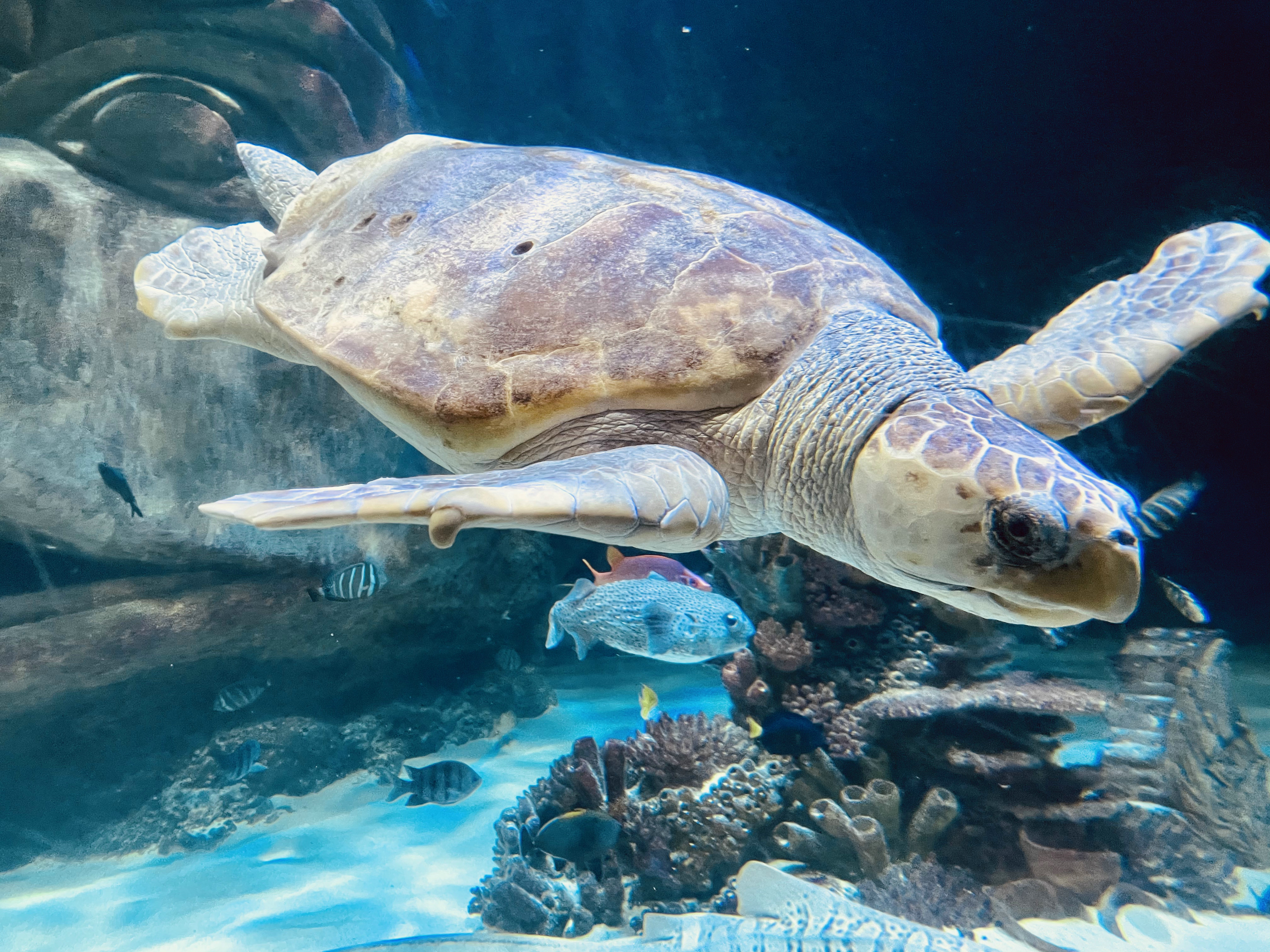
One of the aquarium's most beloved residents is Ted, a rescued loggerhead sea turtle who serves as an ambassador for ocean conservation at SEA LIFE Orlando Aquarium. While Ted cannot be released back into the wild, his story helps guests understand the challenges sea turtles face, including habitat loss, marine debris, and human impacts on Florida's waterways.
Watching Ted swim through his habitat gives visitors an up-close look at one of Florida's most iconic marine animals while inspiring families to help protect wild loggerheads along the state's coastlines.
Green Sea Turtle
Green sea turtles are among Florida's conservation success stories.
Unlike most sea turtles, adults primarily eat:
-
Seagrass
-
Marine algae
This herbivorous diet helps maintain healthy seagrass meadows that support countless marine species throughout Florida's coastal ecosystems. The turtle gets its name from the green color of the fat beneath its shell—not the shell itself.
Green turtle nesting has increased dramatically in Florida over the past two decades thanks to conservation efforts, protected nesting beaches, and improved habitat management.
Meet Chely at SEA LIFE Orlando Aquarium
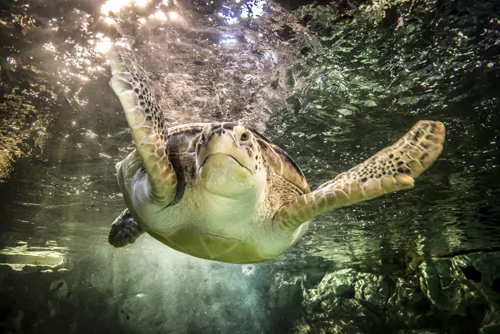
Guests visiting SEA LIFE Orlando Aquarium can also meet Chely, a rescued green sea turtle whose journey highlights the importance of marine rescue and rehabilitation. Chely helps educate visitors about the threats facing green sea turtles, including plastic pollution, fishing gear entanglement, and habitat degradation.
As one of the aquarium's most recognizable residents, Chely encourages guests of all ages to take simple conservation actions—such as reducing single-use plastics and keeping Florida's beaches clean—that can make a meaningful difference for sea turtles in the wild.
Leatherback Sea Turtle
Leatherbacks are the largest turtles on Earth.
|
Characteristic |
Value |
|
Length |
Up to 7 feet |
|
Weight |
Up to 2,000 pounds |
|
Favorite food |
Jellyfish |
|
Diving depth |
More than 4,000 feet |
Instead of a hard shell, leatherbacks have flexible, leathery skin.
They are incredible long-distance migrants and can travel across entire oceans.
Kemp's Ridley Sea Turtle
The Kemp's ridley is the world's rarest sea turtle.
Most nest in Mexico, but juveniles and adults frequently visit Florida's Gulf Coast.
They're known for:
-
Small size
-
Round shell
-
Crab-heavy diet
-
Group nesting called arribadas (primarily in Mexico)
Hawksbill Sea Turtle
Hawksbills are among the most colorful sea turtles.
Their pointed beak helps them feed on:
-
Sea sponges
-
Soft corals
-
Anemones
They're primarily found around:
-
Florida Keys
-
Coral reefs
-
Tropical waters
Rare Visitors
Florida occasionally welcomes:
|
Species |
Frequency |
|
Olive Ridley |
Rare |
|
Leatherback hybrids |
Extremely uncommon |
Florida Sea Turtle Nesting Season
One of the most searched topics is:
When do sea turtles nest in Florida?
Nesting Calendar
|
Month |
Activity |
|
March |
Leatherbacks begin nesting |
|
April |
Nesting increases |
|
May |
Peak nesting starts |
|
June |
Highest activity |
|
July |
Nesting & hatchlings |
|
August |
Hatchlings emerge |
|
September |
Continued hatchlings |
|
October |
Final hatchlings |
Many Florida beaches close portions of nesting habitat overnight to protect turtles.
Best Sea Turtle Nesting Beaches in Florida
|
Beach |
Why It's Famous |
|
Archie Carr National Wildlife Refuge |
World's most important loggerhead nesting beach |
|
Canaveral National Seashore |
Excellent protected habitat |
|
Juno Beach |
Major conservation area |
|
Melbourne Beach |
Heavy nesting activity |
|
Sebastian Inlet |
Loggerheads & greens |
|
Hutchinson Island |
Thousands of nests annually |
|
Delnor-Wiggins Pass |
Gulf Coast nesting |
|
Sanibel Island |
Excellent nesting habitat |
|
Boca Raton beaches |
Green turtle nesting |
|
Palm Beach County beaches |
High nesting density |
Sea Turtle Migration Patterns
Sea turtles are remarkable navigators.
Scientists believe they use:
-
Earth's magnetic field
-
Ocean currents
-
Sun position
-
Wave direction
Typical Migration
|
Life Stage |
Destination |
|
Hatchling |
Open Atlantic |
|
Juvenile |
Sargassum seaweed habitats |
|
Young adult |
Coastal feeding grounds |
|
Adult |
Returns to natal beach to nest |
Many female turtles return to the exact beach where they hatched decades earlier.
Some loggerheads travel from Florida to:
-
Bahamas
-
Cuba
-
Mexico
-
Caribbean
-
Atlantic Canada
Where Can You See Sea Turtles in Florida?
Florida Aquariums with Sea Turtles
|
Aquarium |
City |
Sea Turtles |
|
Orlando |
Marine conservation education and ocean habitats |
|
|
Clearwater Marine Aquarium |
Clearwater |
Rehabilitation and resident sea turtles |
|
The Florida Aquarium |
Tampa |
Rescue and rehabilitation partnerships |
|
Mote Marine Laboratory & Aquarium |
Sarasota |
Rehabilitation and conservation |
|
Miami Seaquarium |
Miami |
Sea turtle exhibits |
|
Gulfarium Marine Adventure Park |
Fort Walton Beach |
Sea turtle care |
|
Loggerhead Marinelife Center |
Juno Beach |
Rehabilitation hospital |
|
Brevard Zoo (Sea Turtle Healing Center) |
Melbourne |
Rehabilitation facility |
Go Behind the Scenes with The Turtle Experience at SEA LIFE Orlando Aquarium
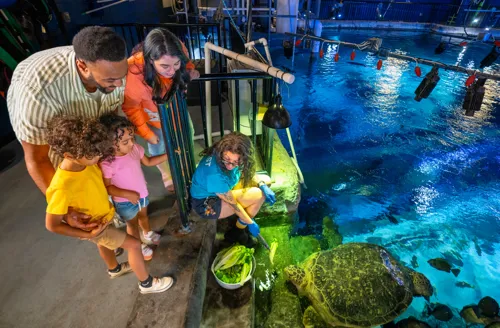
One of the most unforgettable ways to learn about Florida's sea turtles is through The Turtle Experience: Behind the Scenes Tour at SEA LIFE Orlando Aquarium. Perfect for animal lovers, aspiring marine biologists, and families, this premium experience gives guests exclusive access to areas normally reserved for aquarists while offering an up-close encounter with Chely, the aquarium's rescued green sea turtle.
Unlike a typical aquarium visit, you'll step behind the exhibits to discover what it takes to care for thousands of marine animals every day. Along the way, SEA LIFE's expert aquarists share fascinating insights into sea turtle behavior, nutrition, conservation, and the specialized care required for rescued turtles that cannot return to the wild.
What to Expect During The Turtle Experience
|
Experience |
Details |
|
Duration |
Approximately 45 minutes |
|
Featured Animal |
Chely, the rescued green sea turtle |
|
Behind-the-scenes access |
✔ Yes |
|
Meet an aquarist |
✔ Yes |
|
Watch Chely's feeding |
✔ Included |
|
Learn about sea turtle conservation |
✔ Included |
|
Supports conservation |
$3 from every ticket benefits the SEA LIFE Trust |
|
Recommended Age |
Ages 2+ (ticket required) |
Meet Chely Face-to-Flipper
The highlight of the experience is an exclusive feeding session with Chely, whose inspiring rescue story demonstrates both the challenges sea turtles face and the impact conservation efforts can have. During the encounter, you'll watch Chely enjoy a meal while aquarists explain his daily care, answer questions, and share how injuries such as boat strikes, fishing gear entanglement, and marine pollution affect wild sea turtles across Florida.
Every Ticket Helps Protect Wild Sea Turtles
The Turtle Experience is more than a memorable animal encounter—it also supports global ocean conservation. Three dollars from every ticket sold is donated to the SEA LIFE Trust, helping fund projects that protect marine wildlife, restore habitats, and reduce threats facing sea turtles around the world. That means your visit helps support conservation efforts long after your aquarium adventure ends.
Whether you're planning a family vacation in Orlando or creating the ultimate Florida wildlife itinerary, The Turtle Experience is one of the most immersive ways to connect with sea turtles while learning directly from the professionals dedicated to their care and conservation.
Follow Florida's Sea Turtles with Tour de Turtles
Seeing a sea turtle in person is unforgettable—but tracking one across the Atlantic Ocean is even more incredible. Through Tour de Turtles, SEA LIFE Orlando Aquarium partners with the Sea Turtle Conservancy and the SEA LIFE Trust to help researchers better understand how sea turtles migrate after nesting season.
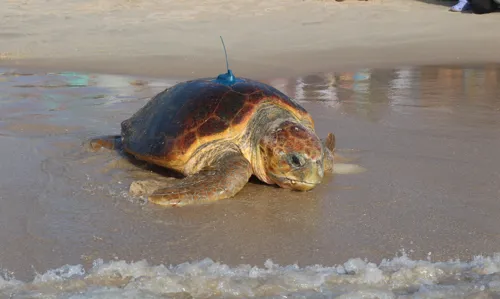
Each year, conservationists carefully attach lightweight satellite transmitters to nesting female sea turtles before they return to the ocean. These transmitters allow scientists—and the public—to follow the turtles' remarkable journeys from Florida's beaches to their feeding grounds throughout the Atlantic and Caribbean. The migration "race" raises awareness about the incredible distances sea turtles travel and the challenges they face along the way.
Meet Kelpy
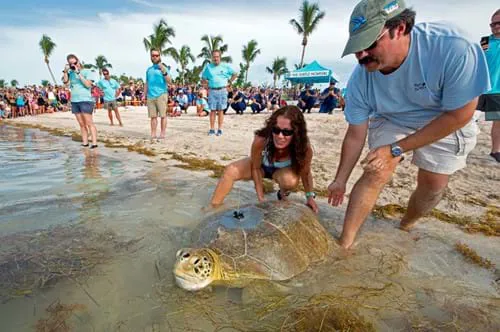
SEA LIFE Orlando helped tag and release Kelpy, a 300-pound female green sea turtle, at the Barrier Island Sanctuary near Melbourne Beach. Kelpy's satellite tracker was funded by the SEA LIFE Trust, allowing researchers and guests to follow her migration in real time while contributing valuable data about green sea turtle movement and habitat use.
Why Tour de Turtles Matters
| Conservation Benefit | Why It Matters |
|---|---|
| Tracks migration routes | Helps scientists understand where sea turtles travel after nesting. |
| Identifies important habitats | Reveals critical feeding and migration areas that need protection. |
| Supports conservation research | Satellite data informs marine management and conservation strategies. |
| Inspires public engagement | Allows families to follow individual turtles online and learn about their journeys. |
| Strengthens partnerships | Supports collaborative work between SEA LIFE Orlando, the SEA LIFE Trust, and the Sea Turtle Conservancy. |
From Orlando to the Open Ocean
Your visit to SEA LIFE Orlando Aquarium connects you with conservation efforts happening far beyond Central Florida. After meeting resident ambassador turtles like Ted and Chely, you can learn how turtles like Kelpy are helping scientists unlock the mysteries of sea turtle migration. Together, these experiences demonstrate how education, research, and conservation work hand in hand to protect Florida's sea turtles for future generations.
Sea Turtle Rehabilitation Centers in Florida
Florida is home to some of the world's leading sea turtle hospitals.
Rehabilitation Facilities
|
Facility |
Specialty |
|
Loggerhead Marinelife Center |
Sea turtle hospital |
|
Gumbo Limbo Nature Center |
Rehabilitation |
|
Whitney Laboratory Sea Turtle Hospital |
Veterinary care |
|
Brevard Zoo Sea Turtle Healing Center |
Rescue & recovery |
|
Clearwater Marine Aquarium |
Rehabilitation |
|
Mote Marine Laboratory |
Rescue programs |
|
The Turtle Hospital |
Marathon (Florida Keys) |
|
Florida Aquarium Conservation Campus |
Rehabilitation partnerships |
Common reasons turtles are rescued include:
-
Boat strikes
-
Fishing line entanglement
-
Plastic ingestion
-
Cold stunning
-
Disease
-
Hook injuries
Conservation Organizations Protecting Florida Sea Turtles
|
Organization |
Focus |
|
Global Charity |
|
|
Sea Turtle Conservancy |
Research |
|
Loggerhead Marinelife Center |
Rescue & education |
|
Florida Fish and Wildlife Conservation Commission |
Nest monitoring |
|
National Park Service |
Beach protection |
|
NOAA Fisheries |
Marine conservation |
|
Mote Marine Laboratory |
Research |
Threats Facing Florida Sea Turtles
Despite decades of conservation, sea turtles still face many challenges.
|
Threat |
Impact |
|
Plastic pollution |
Ingestion |
|
Fishing gear |
Entanglement |
|
Boat strikes |
Injury |
|
Coastal development |
Habitat loss |
|
Artificial lighting |
Hatchling disorientation |
|
Climate change |
Nest temperatures |
|
Rising seas |
Beach erosion |
How You Can Help Protect Sea Turtles
Even small actions make a difference.
At the Beach
-
Fill in holes before leaving
-
Remove beach furniture
-
Pick up trash
-
Stay away from nesting turtles
-
Never touch hatchlings
At Night
Use red flashlights instead of white lights.
Artificial light can confuse hatchlings and lead them away from the ocean.
Fun Sea Turtle Facts
|
Fact |
Did You Know? |
|
Ancient reptiles |
Sea turtles have existed for over 100 million years. |
|
Long migrations |
Some travel thousands of miles every year. |
|
Breath holding |
They can stay underwater for several hours while resting. |
|
Navigation |
They use Earth's magnetic field like a natural GPS. |
|
Shells |
A turtle's shell is part of its skeleton. |
|
Lifespan |
Many live 70 years or longer. |
Sea Turtles and Florida's Marine Ecosystem
Sea turtles are considered keystone species, meaning they help maintain healthy marine ecosystems.
For example:
-
Green turtles keep seagrass healthy through grazing.
-
Hawksbills help coral reefs by eating sponges that compete with corals.
-
Leatherbacks help regulate jellyfish populations.
-
Loggerheads control populations of crabs and shellfish.
Healthy sea turtle populations support healthier oceans, fisheries, and coral reefs.
Learn About Ocean Conservation at SEA LIFE Orlando Aquarium
While wild sea turtle encounters are unforgettable, visiting an aquarium is one of the best ways for families to learn about the marine ecosystems these incredible animals depend on.
At SEA LIFE Orlando Aquarium, guests journey through immersive ocean habitats featuring colorful reef fish, graceful rays, sharks, jellyfish, seahorses, and hundreds of fascinating marine animals. Interactive exhibits and educational talks help children understand ocean conservation, pollution prevention, and the importance of protecting habitats shared by sea turtles and countless other marine species.
Families can also experience Florida's only 360-degree ocean tunnel in Central Florida, where marine life swims overhead, creating an unforgettable underwater adventure without getting wet. After exploring SEA LIFE Orlando Aquarium, many visitors are inspired to continue their marine wildlife journey by visiting Florida's beaches, rehabilitation centers, or conservation organizations to learn more about protecting sea turtles in the wild.
Whether you're introducing young children to marine biology or planning a statewide wildlife road trip, SEA LIFE Orlando Aquarium is an excellent starting point for discovering the incredible ocean life that makes Florida one of the world's premier marine destinations.
Florida Sea Turtle Quick Reference
|
Question |
Answer |
|
How many sea turtle species are found in Florida? |
Five regularly occur, with two rare visitors. |
|
Best time to see nesting? |
May through July |
|
Best time to see hatchlings? |
July through October |
|
Largest species? |
Leatherback |
|
Most common? |
Loggerhead |
|
Rarest? |
Kemp's ridley |
|
Can you swim with sea turtles? |
Only where permitted, while maintaining a safe distance and never disturbing the animals. |
|
Best family learning destination inland |
SEA LIFE Orlando Aquarium |
Final Thoughts
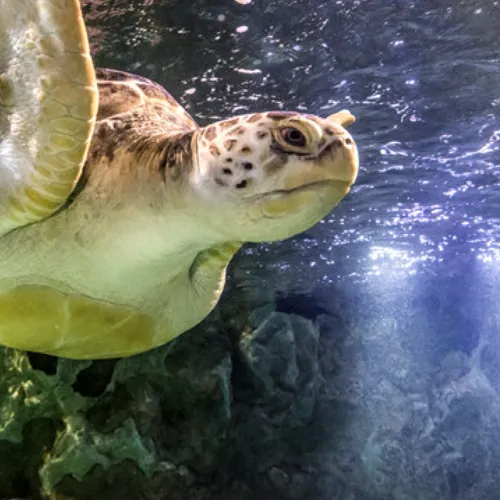
Florida is one of the most important places on Earth for sea turtles. From the iconic loggerhead and graceful green sea turtle to the giant leatherback and the critically endangered Kemp's ridley, these ancient mariners rely on Florida's beaches, reefs, and coastal waters throughout their lives.
Whether you're watching a hatchling emerge beneath the stars, visiting a renowned rehabilitation hospital, exploring an aquarium, or simply practicing responsible beach habits, every visitor can play a role in protecting these remarkable animals. Start your marine adventure at SEA LIFE Orlando Aquarium, then explore Florida's incredible coastline to experience firsthand why the Sunshine State remains one of the world's greatest destinations for sea turtle conservation.
Frequently Asked Questions
Florida is home to five regularly occurring species: loggerhead, green, leatherback, Kemp's ridley, and hawksbill sea turtles. Olive ridley sea turtles are rare visitors offshore.
Sea turtle nesting season generally runs from March through October, with peak nesting occurring between May and July and hatchlings emerging from July through October.
Top locations include Archie Carr National Wildlife Refuge, Canaveral National Seashore, Juno Beach, Sebastian Inlet, Sanibel Island, and rehabilitation facilities like Loggerhead Marinelife Center. Families can also learn about marine conservation at SEA LIFE Orlando Aquarium.
Yes. All sea turtle species found in Florida are protected under state and federal law, with most listed as threatened or endangered due to habitat loss, pollution, fishing gear entanglement, and boat strikes.
Visitors can protect sea turtles by keeping beaches clean, removing chairs and umbrellas each evening, filling in sand holes, avoiding artificial lights near nesting beaches at night, never disturbing nesting turtles or hatchlings, and supporting accredited aquariums and conservation organizations that educate the public about ocean conservation.
Related blogs

Meet Ted the Famous Loggerhead Turtle at SEA LIFE Orlando Aquarium
Discover Ted the rescued loggerhead sea turtle at SEA LIFE Orlando Aquarium at ICON Park. Learn his conservation story, where to see him, fun facts, and why he’s Orlando’s most-loved animal.
Related blog posts
Meet Chely the Green Sea Turtle
One of the best places to see sea turtles in Orlando is SEA LIFE Orlando Aquarium, home to rescued Green Sea Turtle Chely and Loggerhead Sea Turtle Ted. Guests can see these incredible marine animals year-round while exploring Florida's only 360° Ocean Tunnel and learning about sea turtle rescue, rehabilitation, and ocean conservation.
Related blog posts
Best Orlando Attraction for Animal Lovers: Where to See, Touch & Learn About Wildlife in Orlando
SEA LIFE Orlando Aquarium is one of the best Orlando attractions for animal lovers, offering a 360-degree ocean tunnel, hands-on touch pool, rescued sea turtle Ted, sharks, rays, jellyfish, and thousands of marine animals. Other top wildlife attractions include Disney's Animal Kingdom, Gatorland, SeaWorld Orlando, Wild Florida, and the Central Florida Zoo.
Related blog posts
Ultimate Guide to Marine Life You Can See in Orlando
Looking for the best places to see sharks, sea turtles, stingrays, jellyfish, dolphins, penguins, and tropical fish in Orlando? This complete guide covers every major aquarium, marine attraction, and wildlife destination across Central Florida, helping families, animal lovers, and vacation planners build the ultimate aquatic itinerary.
Related blog posts