Complete Guide to Stingrays in Florida
- Wednesday August 19th 2026
- Author: Matt Meyers
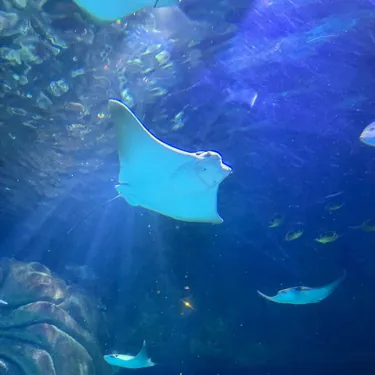
Florida's warm coastal waters make it an ideal place to discover stingrays. From the Gulf of Mexico to the Atlantic Ocean, Florida's beaches, bays, estuaries and shallow coastal habitats are home to several species of rays.
But you do not have to head to the beach to see one.
Florida is also home to aquariums, theme parks and animal experiences where visitors can learn about stingrays and see them up close. In Orlando alone, you can discover rays at SEA LIFE Orlando Aquarium, SEA LIFE Florida, SeaWorld Orlando, Discovery Cove and The Seas with Nemo & Friends at EPCOT. In Tampa Bay, you can visit The Florida Aquarium or even see Cownose Stingrays at a baseball stadium.
Whether you are looking for the best place to see stingrays in Florida, wondering whether stingrays are dangerous or simply curious about what these unusual animals eat, this guide covers everything you need to know.
Florida Stingrays at a Glance
|
Question |
Answer |
|
Where do stingrays live in Florida? |
Coastal waters, beaches, bays, estuaries, lagoons and sandy or muddy seafloors |
|
Are stingrays dangerous? |
Stingrays are generally peaceful and avoid people, but they can use their barbs defensively if threatened |
|
What do stingrays eat? |
Depending on the species, they eat shrimp, crabs, clams, worms, mollusks and small fish |
|
How big do stingrays get? |
Size varies by species, from small rays measuring around 2 feet across to species exceeding 7 feet |
|
Where can I see stingrays in Orlando? |
SEA LIFE Orlando, SeaWorld Orlando, Discovery Cove and The Seas with Nemo & Friends at EPCOT |
|
Where can I see stingrays in Tampa? |
The Florida Aquarium, TECO's Manatee Viewing Center and Tropicana Field |
|
Can I touch stingrays in Florida? |
Yes. Several Florida attractions offer supervised stingray touch or feeding experiences |
|
What should I do if I see a stingray at the beach? |
Give it space and use the stingray shuffle when walking through shallow water |
What Is a Stingray?
Stingrays are cartilaginous fish, which means their skeletons are made from flexible cartilage instead of hard bone. They are related to sharks and belong to a group of animals known as batoids.
Their wide pectoral fins give stingrays their distinctive flat shape and allow them to glide through the water. Some species move their fins in a graceful wave while others appear to fly through the water.
Stingrays also have specialized sensory organs that allow them to detect electrical signals produced by prey. This adaptation is particularly useful when they are searching for food beneath sand or sediment.
Many stingrays have a defensive barb near the base of their tail. Despite their reputation, stingrays do not typically seek out humans. Their barbs are primarily a defense mechanism.
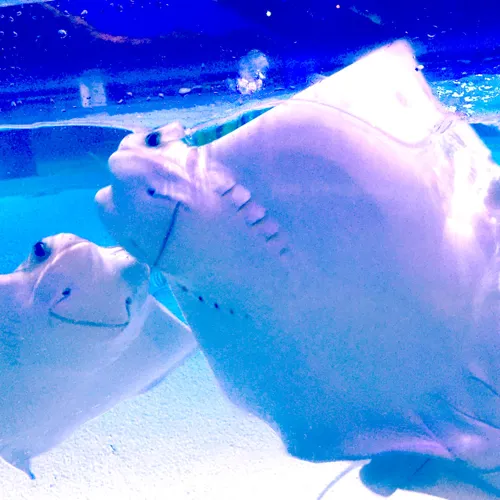
What Types of Stingrays Are Found in Florida?
Florida waters contain a diverse variety of rays. Some are true stingrays, while others belong to related groups such as eagle rays and electric rays.
Not every ray found in Florida has a venomous barb, which is why identifying different species can be fascinating for visitors exploring Florida's marine life.
Florida Stingray and Ray Species Guide
|
Species |
Where Found in Florida |
What They Eat |
Approximate Size |
|
Southern Stingray |
Warm coastal waters, bays, estuaries and sandy seafloors |
Worms, shrimp, crabs, mollusks and small fish |
Up to about 5 feet across |
|
Atlantic Stingray |
Coastal waters, estuaries, lagoons and shallow areas |
Worms, shrimp, crabs and mollusks |
Around 2 feet across |
|
Bluntnose Stingray |
Shallow coastal waters, bays and estuaries |
Worms, clams, shrimp and small fish |
Up to about 3 feet across |
|
Roughtail Stingray |
Coastal waters, bays and estuaries |
Bottom dwelling invertebrates and fish |
Up to about 7.25 feet across |
|
Yellow Stingray |
Warm shallow coastal waters |
Small bottom dwelling invertebrates |
Generally a smaller ray |
|
Cownose Ray |
Bays, estuaries and coastal waters |
Clams, crabs and other invertebrates |
Several feet across |
|
Smooth Butterfly Ray |
Sandy and muddy coastal seafloors |
Mollusks, worms, crustaceans and small fish |
Several feet across |
|
Lesser Electric Ray |
Coastal and nearshore waters |
Small fish and invertebrates |
Generally less than 2 feet across |
|
Spotted Eagle Ray |
Warm coastal waters |
Mollusks, crustaceans and other bottom dwelling prey |
Can reach several feet across |
The exact size of a ray depends on its species, age and sex. Some Florida species remain relatively small while others can grow to impressive sizes.
Stingrays at SEA LIFE Orlando Aquarium
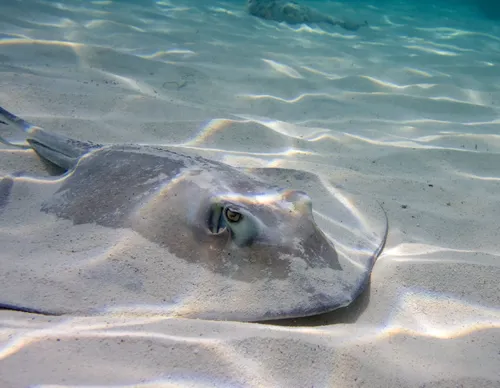
For visitors searching for an aquarium with stingrays in Orlando, SEA LIFE Orlando Aquarium offers an immersive way to see these fascinating animals.
SEA LIFE Orlando's exhibits include stingrays and other rays, allowing guests to observe their movement, anatomy and behavior while learning about their role in ocean ecosystems. The aquarium's 360 degree Ocean Tunnel provides an especially memorable perspective, with sharks, stingrays and other marine animals swimming around visitors.
SEA LIFE Orlando's animal information identifies Southern Stingrays and Mangrove Rays among the rays guests can learn about at the aquarium.
Types of Stingrays at SEA LIFE Orlando
|
Ray |
What Guests Can Learn |
|
Southern Stingray |
Camouflage, feeding behavior, anatomy and defensive adaptations |
|
Mangrove Ray |
How rays adapt to coastal environments and sandy habitats |
SEA LIFE Orlando is located at ICON Park on International Drive, making it a convenient option for families looking for marine life experiences in the heart of Orlando.
Where to See Stingrays in Florida
If you are searching for where to see stingrays in Florida, there are many options beyond the beach.
Florida has aquariums, theme parks, animal encounters and even a professional baseball stadium where visitors can encounter rays.
1. SEA LIFE Orlando Aquarium
Orlando
SEA LIFE Orlando is an aquarium experience focused on marine life, with stingrays appearing alongside sharks, sea turtles and tropical fish.
The aquarium's 360 degree Ocean Tunnel allows visitors to see marine animals swimming overhead and around them.
Best for: Families who want an immersive aquarium experience in Orlando.
2. SeaWorld Orlando
Orlando
SeaWorld Orlando offers one of Florida's most interactive stingray experiences at Stingray Lagoon.
Visitors can get close to stingrays and participate in feeding experiences. SeaWorld currently offers feeding trays that can be used at Stingray Lagoon, while its animal experience information highlights opportunities to hand feed stingrays.
SeaWorld also highlights conservation work involving stingrays, sharks and their habitats.
Best for: Visitors looking for a hands on stingray experience.
3. Discovery Cove
Orlando
For an even more immersive experience, Discovery Cove offers a dedicated Ray Feeding experience.
Guests can join Discovery Cove aquarists early in the morning to help feed Cownose and Southern Stingrays in The Grand Reef. The experience includes time with the aquarists and an opportunity to learn how the animals are cared for.
The experience is available to guests ages 6 and older and requires advance purchase and park admission.
Best for: Visitors who want to feed stingrays and learn directly from animal care experts.
4. The Seas with Nemo & Friends at EPCOT
Orlando
Disney visitors can see rays at The Seas with Nemo & Friends Pavilion at EPCOT.
The pavilion's massive 5.7 million gallon aquarium contains thousands of marine animals, including sharks, sea turtles, reef fish and rays. Disney specifically identifies Spotted Eagle Rays among the animals found in the habitat.
Guests may also be able to see animal care experts feeding and training rays during scheduled feeding demonstrations.
For certified divers, Disney offers DiveQuest, which provides an opportunity to scuba dive inside the aquarium alongside marine life.
Best for: Disney visitors who want to see rays as part of a larger aquarium experience.
5. SEA LIFE Florida at LEGOLAND Florida Resort
Winter Haven
If you're looking for a place to see stingrays in Central Florida, SEA LIFE Florida at LEGOLAND Florida Resort is another option to add to your list.
Located within LEGOLAND Florida Resort in Winter Haven, SEA LIFE Florida features Stingray Bay, where guests can watch stingrays glide across the sandy seafloor. The aquarium's official Creatures and Exhibits page describes stingrays as ancient relatives of sharks and highlights their unique ability to breathe through specialized openings behind their eyes.
Stingray Bay is part of a larger SEA LIFE Florida experience featuring more than 150 species and 3,000 marine creatures. Families can explore exhibits featuring sharks, seahorses, clownfish, jellyfish, coral reefs and freshwater species, making it an easy addition to a LEGOLAND Florida day.
The aquarium also features a dedicated Oceanarium: Theme Park Under the Sea, along with exhibits such as Key West Harbor, Coral Reef, Seahorse Nursery, Blackbeard's Shipwreck and Jelly Invaders.
Best for: Families visiting LEGOLAND Florida who want to add an aquarium experience and see stingrays without traveling to Florida's coast.
6. The Florida Aquarium
Tampa
The Florida Aquarium is one of the strongest options for seeing and learning about stingrays in the Tampa Bay area.
Its Stingray Beach habitat features Cownose Stingrays that visitors can touch. The habitat also includes a Bluespotted Ribbontail Ray and other marine animals.
The aquarium also offers a behind the scenes feeding experience with its Cownose Stingrays.
Southern Stingrays can be found in the aquarium's Coral Reef habitat as well.
Best for: Families looking for a dedicated aquarium stingray experience.
7. TECO's Manatee Viewing Center
Apollo Beach
The Tampa Bay area offers another unusual opportunity to see Cownose Stingrays at TECO's Manatee Viewing Center.
The Florida Aquarium announced that seven Cownose Stingrays returned to Cownose Cove at the Manatee Viewing Center in January 2026 after extensive repairs to the habitat following Hurricanes Helene and Milton. The rays have been part of the habitat since 2016 and provide visitors with a hands on marine life experience.
Best for: Visitors exploring Apollo Beach and Tampa Bay who want another opportunity to encounter Cownose Rays.
8. Tampa Bay Rays at Tropicana Field
St. Petersburg
Yes, you can even see stingrays at a baseball stadium.
The Tampa Bay Rays have a long standing relationship with The Florida Aquarium, and seven Cownose Stingrays now live in the newly renovated Cownose Clubhouse at Tropicana Field.
The 2026 season marked the return of the stingrays to Tropicana Field following the stadium's recovery from Hurricane Milton. Fans can visit the Cownose Clubhouse, touch the rays and learn about them during Rays home games.
The Cownose Clubhouse is a 35 foot, 10,000 gallon exhibit located beyond the right center field wall.
Best for: Baseball fans and visitors looking for one of Florida's most unexpected stingray experiences.
Florida Stingray Experiences Compared
|
Location |
City |
Rays You May See |
Touch Rays? |
Feed Rays? |
Experience Type |
|
SEA LIFE Orlando |
Orlando |
Southern Stingrays, Mangrove Rays |
No |
Animal care experiences vary |
Aquarium |
|
SeaWorld Orlando |
Orlando |
Stingrays |
Yes |
Yes |
Theme park |
|
Discovery Cove |
Orlando |
Cownose and Southern Stingrays |
Yes |
Yes |
Immersive animal experience |
|
The Seas at EPCOT |
Orlando |
Spotted Eagle Rays and other rays |
No |
View scheduled care activities |
Aquarium |
|
SEA LIFE Florida at LEGOLAND® Florida Resort |
Winter Haven |
Stingray Bay with stingrays gliding across the sandy habitat |
No |
View and learn about stingrays |
Aquarium |
|
The Florida Aquarium |
Tampa |
Cownose, Southern and other rays |
Yes |
Yes, select experiences |
Aquarium |
|
TECO Manatee Viewing Center |
Apollo Beach |
Cownose Stingrays |
Yes |
Experience varies |
Wildlife viewing center |
|
Tropicana Field |
St. Petersburg |
Cownose Stingrays |
Yes |
No |
Baseball stadium |
This comparison is particularly useful for visitors trying to decide between a traditional aquarium visit, a hands on encounter or a unique Florida attraction.
What Do Stingrays Eat?
Most stingrays are adapted to finding food along the ocean floor.
Depending on the species, their diet may include:
-
Shrimp
-
Crabs
-
Clams
-
Mollusks
-
Worms
-
Small fish
-
Other bottom dwelling invertebrates
Cownose Rays are especially interesting feeders. At The Florida Aquarium, they are described as foraging predators that eat invertebrates such as clams and crabs. Their mouths and crushing tooth plates allow them to break open hard shells.
Southern Stingrays use specialized sensory organs to locate prey beneath sand and sediment. They can move sand with their noses and fins to uncover food.
How Big Do Stingrays Get?
There is no standard stingray size.
Some species are only a couple of feet across, while the largest species can reach several feet in width.
Southern Stingrays can grow to around 5 feet across, while Roughtail Stingrays can become substantially larger. The size of a ray is one of the reasons seeing different species can be so interesting.
At an aquarium, visitors may also notice that the body shape of a Cownose Ray looks very different from a Southern Stingray or Spotted Eagle Ray.
Are Stingrays Dangerous?
The short answer is that stingrays are generally not aggressive toward people.
Most stingrays would rather swim away than interact with a swimmer. Their barbs are primarily a defensive adaptation.
The greatest risk generally occurs when someone accidentally steps on a ray in shallow water.
If you are walking through shallow Florida water, use the stingray shuffle. Instead of taking large steps, shuffle your feet along the bottom. This gives rays more opportunity to detect your presence and move away.
Never attempt to grab, chase or intentionally touch a wild stingray.
At an aquarium or supervised animal encounter, always follow the instructions provided by animal care experts.
Stingray vs. Manta Ray: What's the Difference?
Stingrays and manta rays are both rays, but they are not the same type of animal.
Many stingrays spend significant amounts of time near the seafloor and feed on bottom dwelling animals. Manta rays are much larger filter feeders that consume plankton and other tiny organisms.
Their body shapes also differ. Manta rays have broad triangular fins and a forward facing mouth, while many stingrays have mouths underneath their bodies.
Florida's waters contain a diverse range of rays, so seeing a ray does not necessarily mean you are looking at a stingray.
Why Are Stingrays Important to Florida's Ecosystems?
Stingrays are an important part of coastal food webs.
As they search for prey, rays disturb sand and sediment on the seafloor. This feeding activity can help move nutrients through marine habitats and expose organisms living beneath the surface.
Rays are also prey for larger marine animals, including some shark species.
Their presence therefore tells us something about the health and complexity of Florida's coastal ecosystems.
How the SEA LIFE TRUST Helps Stingrays and Marine Life
Learning about stingrays is also a chance to understand the importance of marine conservation.
The SEA LIFE TRUST is the charitable partner of SEA LIFE and works to protect marine life and aquatic habitats around the world.
Its work supports conservation, rescue and rehabilitation projects involving marine animals and their environments.
The broader SEA LIFE conservation mission focuses on Rescue, Restore and Protect, helping audiences understand the threats facing marine ecosystems and what they can do to make a difference.
For stingrays and other marine creatures, conservation can involve protecting habitats, reducing pollution, making sustainable seafood choices and preventing discarded fishing gear from entering the ocean.
Visitors can also make a difference through simple everyday actions, such as reducing single use plastics, properly disposing of fishing line and giving wild animals plenty of space.
Stingray Facts for Kids
|
Stingray Fact |
Why It Is Interesting |
|
Stingrays are fish |
They are cartilaginous fish related to sharks |
|
They do not have bones like humans |
Their skeletons are made from cartilage |
|
They can sense electricity |
Electroreceptors help them locate prey |
|
Their eyes sit on top of their bodies |
This helps them see while resting on the seafloor |
|
They have spiracles |
Spiracles help bring water toward their gills |
|
Their barbs are defensive |
Stingrays generally use them when threatened |
|
Some species give birth to live young |
Baby stingrays are called pups |
|
Some rays travel in groups |
Cownose Rays can form large groups |
|
They come in many shapes and sizes |
Florida has many different ray species |
Where Should You See Stingrays in Florida?
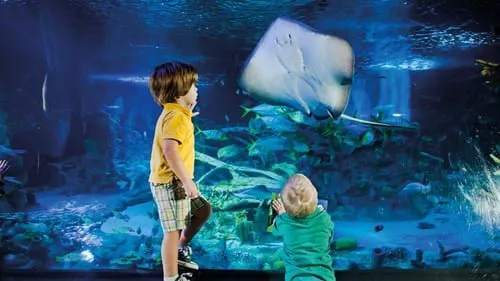
The best place to see stingrays depends on the type of experience you want.
If you want an immersive aquarium experience in Orlando, SEA LIFE Orlando Aquarium and SEA LIFE Florida at LEGOLAND® Florida Resort are great options.
If you want to touch or feed stingrays, SeaWorld Orlando, Discovery Cove and The Florida Aquarium offer hands on opportunities.
If you are visiting Walt Disney World, The Seas with Nemo & Friends at EPCOT is an excellent place to see rays as part of one of the largest aquarium habitats in the United States.
If you are visiting Tampa Bay, The Florida Aquarium, TECO's Manatee Viewing Center and Tropicana Field each offer unique opportunities to see Cownose and other rays.
And if you are visiting Florida's beaches, you may be lucky enough to see a stingray in the wild. Just remember to give it plenty of space and practice the stingray shuffle when walking through shallow water.
Frequently Asked Questions About Stingrays in Florida
You can see stingrays at beaches and coastal waters throughout Florida, as well as at aquariums and animal attractions. Popular places include SEA LIFE Orlando Aquarium, SeaWorld Orlando, Discovery Cove, The Seas with Nemo & Friends at EPCOT, The Florida Aquarium, TECO's Manatee Viewing Center and Tropicana Field.
Orlando has several places to see rays. SEA LIFE Orlando Aquarium features Southern Stingrays and Mangrove Rays, while SeaWorld Orlando offers Stingray Lagoon. Discovery Cove provides Cownose and Southern Stingray feeding experiences, and The Seas with Nemo & Friends at EPCOT features Spotted Eagle Rays and other rays.
Yes. Several attractions offer supervised opportunities to touch stingrays. SeaWorld Orlando, Discovery Cove, The Florida Aquarium, TECO's Manatee Viewing Center and the Tampa Bay Rays' Cownose Clubhouse all offer opportunities to get closer to rays, although specific experiences and availability vary.
Florida waters are home to Southern Stingrays, Atlantic Stingrays, Bluntnose Stingrays, Roughtail Stingrays and Yellow Stingrays, among other ray species. Cownose Rays and Spotted Eagle Rays are also found in Florida waters.
Stingrays are generally peaceful animals and typically avoid humans. Their barbs are defensive structures and can cause injuries if a ray feels threatened, particularly if someone accidentally steps on one. When walking through shallow Florida water, use the stingray shuffle and give wildlife plenty of space.
Related blogs
Complete Guide to Sharks in Florida: Species, Migration, and Where to See Them at Aquariums
Florida is one of the best places in the world to learn about sharks. From migrating blacktip sharks along the coastline to colorful reef sharks found inside aquariums, discover Florida shark species, migration patterns, fun facts, and the best places to see sharks—including SEA LIFE Orlando Aquarium at ICON Park.
Related blog posts
Complete Guide to Sea Turtles in Florida
Florida is one of the world's most important homes for sea turtles. From nesting beaches along the Atlantic Coast to rehabilitation hospitals and aquariums where you can learn about marine conservation, discover everything you need to know about Florida's incredible sea turtles in this complete guide.
Related blog posts
Best Orlando Attraction for Animal Lovers: Where to See, Touch & Learn About Wildlife in Orlando
SEA LIFE Orlando Aquarium is one of the best Orlando attractions for animal lovers, offering a 360-degree ocean tunnel, hands-on touch pool, rescued sea turtle Ted, sharks, rays, jellyfish, and thousands of marine animals. Other top wildlife attractions include Disney's Animal Kingdom, Gatorland, SeaWorld Orlando, Wild Florida, and the Central Florida Zoo.
Related blog posts
Meet the Axolotls at SEA LIFE Orlando: Fun Facts About One of the World's Most Fascinating Amphibians
Meet one of nature's most extraordinary amphibians at SEA LIFE Orlando Aquarium. Learn amazing axolotl facts, discover why these smiling salamanders can regenerate limbs, and find out where to see them during your next Orlando family adventure.
Related blog posts
Meet Chely the Green Sea Turtle
One of the best places to see sea turtles in Orlando is SEA LIFE Orlando Aquarium, home to rescued Green Sea Turtle Chely and Loggerhead Sea Turtle Ted. Guests can see these incredible marine animals year-round while exploring Florida's only 360° Ocean Tunnel and learning about sea turtle rescue, rehabilitation, and ocean conservation.
Related blog posts
Meet Ted the Famous Loggerhead Turtle at SEA LIFE Orlando Aquarium
Discover Ted the rescued loggerhead sea turtle at SEA LIFE Orlando Aquarium at ICON Park. Learn his conservation story, where to see him, fun facts, and why he’s Orlando’s most-loved animal.
Related blog posts