25 Wild Florida Shark Facts: The Ultimate Guide
- Monday October 12th 2026
- Author: Matt Meyers
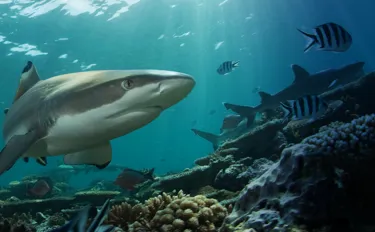
Florida is famous for beaches, warm water and abundant marine life, so it should come as no surprise that Florida sharks are a major part of the state's coastal ecosystems. But the reality of sharks in Florida is much more interesting than the headlines often suggest.
Some Florida sharks migrate thousands of miles. Some spend time in estuaries. Bull sharks can travel into freshwater. Florida is also one of the easiest places in the United States to find fossil shark teeth, including teeth from sharks that disappeared millions of years ago.
For families visiting Orlando, you can continue exploring the world of sharks without heading to the coast. SEA LIFE Orlando Aquarium at ICON Park on International Drive is an indoor aquarium where visitors can see several shark species, learn about marine-life adaptations and explore Florida's only 360° Ocean Tunnel. The aquarium's current shark collection includes bonnethead sharks, zebra sharks, bamboo sharks, epaulette sharks, and coral catsharks.
And while Florida records more unprovoked shark bites than any other U.S. state, the risk to an individual swimmer remains very low.
Here are 25 Florida shark facts that put the state's sharks into perspective.
1. Florida Is Home to Many Different Types of Sharks
There isn't just one typical Florida shark.
Florida waters are home to numerous species, including blacktip, bonnethead, bull, great hammerhead, lemon, nurse and tiger sharks. Other species occur in Florida as well.
The species you encounter depends on factors such as location, water temperature, depth, habitat and season.
That means a shark swimming along a sandy Atlantic beach can have very different habits from a shark living around mangroves, reefs or deeper offshore waters.
2. Blacktip Sharks Are One of Florida's Most Common Coastal Sharks
Blacktip sharks, Carcharhinus limbatus, are common in Florida's coastal waters, bays and estuaries.
They're fast swimmers that often stay near the surface and feed primarily on fish. Blacktips also frequently form large schools during their annual migration.
So, what is the most common shark found in Florida?
There isn't a single official statewide ranking that identifies one species as the most common shark everywhere in Florida. However, blacktip sharks are among the most common and widely encountered coastal sharks in the state.
3. Blacktip Sharks Migrate to Florida by the Thousands
One of the most spectacular Florida shark facts involves the seasonal migration of blacktip sharks.
Every winter, thousands of blacktip sharks migrate south along the Atlantic coast and gather in southeastern Florida.
Researchers have documented large seasonal aggregations near the Palm Beach County coastline, making the area an important location for studying blacktip shark migration.
This isn't a handful of sharks traveling together. Thousands of sharks can gather in the region during peak periods.
4. The Blacktip Migration Peaks During Winter
The timing of the migration is closely connected to environmental conditions, particularly water temperature.
The major blacktip aggregation in southeastern Florida is a winter phenomenon, with the highest concentrations generally occurring around January through March.
The sharks then begin moving northward in spring.
So, when is the blacktip shark migration in Florida? Winter is the key season to know, particularly January through March for the major southeastern Florida aggregation.
5. Researchers Have Counted More Than 12,000 Blacktips in a Survey Area
One of the most striking examples of Florida's shark abundance came from aerial research.
A four-year study of blacktip sharks along the Palm Beach County coast recorded a maximum of 12,128 sharks within a defined 75.6-square-kilometer survey area in 2011.
That number doesn't represent every blacktip shark along Florida's coast. It represents sharks counted within the researchers' survey area, which makes the distinction important.
6. Blacktip Sharks Don't Stay in Florida All Year
The seasonal migration continues north after winter.
Researchers have tracked blacktip sharks traveling north along the Atlantic coast toward Georgia and the Carolinas, with some individuals traveling much farther north.
Some tracked blacktip sharks have traveled as far north as Long Island, New York.
As temperatures cool in autumn, many blacktips begin the journey south again.
7. Blacktip Sharks Can Form Remarkably Dense Groups
The Palm Beach County coastline creates an unusual natural setting for migrating sharks.
The continental shelf narrows in this region, while the Gulf Stream runs close to shore. These conditions can help concentrate migrating blacktips into relatively shallow coastal waters.
During one research survey, the maximum calculated density reached more than 800 sharks per square kilometer.
8. Blacktip Sharks Are Not the Same as Blacktip Reef Sharks
The names sound almost identical, but blacktip shark and blacktip reef shark refer to different species.
The blacktip shark found in Florida's coastal waters is Carcharhinus limbatus. The blacktip reef shark is Carcharhinus melanopterus, a tropical Indo-Pacific species.
This distinction matters when researching Florida sharks or looking at shark exhibits.
SEA LIFE Florida at LEGOLAND® Florida Resort features blacktip reef sharks along with several other shark species. Blacktip reef sharks should not be confused with the blacktip sharks that migrate along Florida's Atlantic coast.
9. Bull Sharks Really Can Live in Freshwater
Yes, bull sharks can enter freshwater.
Bull sharks are one of the few shark species capable of living in freshwater for periods of time. They can sometimes travel hundreds of miles inland through coastal river systems.
This ability is one reason bull sharks are particularly interesting when studying how sharks use different habitats.
10. Lemon Sharks Can Also Enter Freshwater
Bull sharks aren't the only Florida sharks that can tolerate lower-salinity environments.
Lemon sharks commonly enter estuaries and can venture into freshwater areas, although they don't travel as far up rivers as bull sharks.
The important distinction is that entering freshwater doesn't mean a shark has become a permanent freshwater species. Many shark movements between saltwater, brackish water and freshwater are connected to habitat and environmental conditions.
11. Nurse Sharks Spend a Lot of Time on the Bottom
Nurse sharks are abundant coastal sharks found along both Florida's Gulf and Atlantic coasts.
Unlike the fast-swimming image many people associate with sharks, nurse sharks are often found resting on the bottom around reefs, rocks and mangrove islands.
Their diet includes crustaceans, mollusks, squid and fish.
That makes "shark" a surprisingly broad category of animal behavior.
12. Bonnethead Sharks Have a Very Unusual Diet
Bonnetheads are small hammerhead relatives found in Florida waters.
They are especially interesting because research has shown that bonnetheads can consume and digest plant material, making them the first shark species recognized as omnivorous.
SEA LIFE Orlando Aquarium currently includes bonnethead sharks in its shark collection.
For children, this is a useful reminder that animal diets don't always fit the simple categories we expect.
13. Shark Shapes Tell You a Lot About Their Lifestyle
A shark's body, fins, mouth and teeth aren't random features.
A streamlined body can help a fast-swimming shark move efficiently through the water. A blunt mouth and flattened body can be associated with a very different lifestyle.
For example, nurse sharks have a broad, blunt mouth and bottom-oriented lifestyle, while blacktips have a pointed snout and active swimming behavior.
When looking at sharks in an aquarium, comparing these physical features can turn a visit into a simple marine-biology lesson.
14. Shark Teeth Are Continually Replaced
Sharks don't have one permanent set of teeth for life.
They continuously produce and replace teeth, which is one reason shark teeth are so abundant in the fossil record.
Sharks can shed many thousands of teeth over their lifetimes.
That creates an enormous number of opportunities for individual teeth to become buried and preserved.
15. Most of a Shark's Skeleton Is Cartilage
Sharks belong to a group of fishes called cartilaginous fishes.
Instead of having a skeleton made primarily from bone, their internal skeleton is composed largely of cartilage.
Teeth are much more likely to survive in the fossil record than the rest of the skeleton because cartilage breaks down relatively easily.
That is why Florida's fossil record contains so many isolated shark teeth.
16. Florida Is Famous for Fossil Shark Teeth
Florida's geological history makes it particularly interesting for fossil hunters.
Large portions of the state have been covered by the ocean at different points in geological history. Marine sediments deposited during those periods can contain fossil shark teeth.
The result is a state where shark teeth can turn up in places ranging from beaches to creek beds.
17. Fossil Shark Teeth Can Be Millions of Years Old
A shark tooth found in a Florida creek might have belonged to an animal that lived millions of years ago.
Many fossil shark teeth found in Florida creeks date to roughly 9 to 10 million years ago, while some locations contain considerably older specimens.
That means a tiny tooth found in a stream can provide a physical connection to an ocean ecosystem that existed long before modern Florida looked the way it does today.
18. Fossil Shark Teeth Can Be Black, Brown, Gray, Red or Other Colors
Modern shark teeth are generally light colored, but fossil teeth can look dramatically different.
During fossilization, minerals move through sediments and fill spaces within the tooth. Different minerals and chemical conditions can produce colors ranging from black and gray to orange, red, green and white.
Color can therefore provide a clue about a tooth's history, although it isn't enough by itself to determine exactly how old a specimen is.
19. Venice Is Famous for Shark-Tooth Hunting
The Venice area on Florida's Gulf Coast is particularly well known for fossil shark teeth.
Venice promotes the area as the Shark Tooth Capital of the World, and nearby beaches are popular places to look for fossilized teeth.
That doesn't mean every beach visit produces a giant megalodon tooth. Fossil hunting is naturally unpredictable, and finding teeth can be hit or miss.
20. Florida's Peace River Is Another Fossil-Hunting Destination
The Peace River is well known among recreational fossil collectors.
Shark teeth are among the commonly recovered fossils from the Lower Peace River area, along with ray fossils and remains from other animals.
For anyone interested in Florida shark teeth, river collecting offers a completely different setting from beachcombing.
21. Megalodon Teeth Are Part of Florida's Fossil Record
Megalodon wasn't a modern Florida shark, but its fossil teeth can be found in Florida.
Megalodon lived millions of years ago, and its enormous teeth are among the most recognizable shark fossils.
Finding one is much less routine than finding a small shark tooth, though. A complete, large megalodon tooth is a much rarer find.
22. Identifying a Fossil Shark Tooth to Species Can Be Difficult
A triangular fossil tooth may look easy to identify, but shark paleontology can get complicated quickly.
Tooth shape varies depending on where a tooth sat in the jaw, the shark's age and individual variation. Fossils may also be incomplete or worn.
That means identifying a fossil tooth to the species level isn't always possible from appearance alone.
If you find a tooth while fossil hunting, treat identification as part of the fun rather than assuming every triangular tooth belongs to a famous prehistoric shark.
23. Florida Has More Recorded Shark Bites Than Any Other U.S. State
Florida's long coastline, warm water and huge number of people participating in ocean recreation all contribute to its high number of recorded shark bites.
In 2025, the International Shark Attack File confirmed 11 unprovoked shark bites in Florida, with no fatalities.
Florida's 2025 figure was below its recent five-year annual average of 19 incidents.
A high number of recorded bites doesn't mean an individual beachgoer is likely to be bitten.
24. The Chance of a Shark Bite Is Very Low
So, what are the chances of being attacked by a shark in Florida?
There isn't one current probability that accurately represents every Florida beachgoer because exposure varies with location, activity, time in the water and other factors.
For practical beach safety, the Florida Museum of Natural History recommends measures such as swimming with others, avoiding the water during darkness or twilight, staying alert around fishing activity and leaving the water if sharks are known to be present.
Understanding shark behavior is more useful than simply thinking of sharks as dangerous animals. Most people who visit Florida beaches will never experience a shark bite.
25. You Can Learn About Sharks Without Going Into the Ocean
For families visiting Orlando, learning about sharks doesn't require a trip to the coast.
SEA LIFE Orlando Aquarium at ICON Park on International Drive is a fully indoor aquarium with more than 5,000 sea creatures across its interactive zones. The aquarium's current experiences include sharks, sea turtles, stingrays and other marine life, including views from Florida's 360° Ocean Tunnel.
Its shark collection includes species from different parts of the world's oceans, providing an opportunity to see how different sharks can be from one another.
The distinction between wild Florida sharks and aquarium animals is important. Seeing a shark at SEA LIFE Orlando Aquarium doesn't mean that species is necessarily a shark you would encounter along a Florida beach.
Instead, an aquarium can provide an opportunity to compare different shark shapes, habitats and adaptations without having to identify animals in open water.
For families building an Orlando itinerary, SEA LIFE Orlando Aquarium is also an indoor attraction at ICON Park, making it a practical option to pair with other International Drive activities or use as a weather-flexible part of a vacation day.
Florida Sharks at a Glance
|
Florida shark topic |
What to know |
|
Blacktip sharks |
Common coastal sharks that form large seasonal groups |
|
Blacktip migration |
Thousands migrate seasonally along Florida's Atlantic coast |
|
Peak southeastern Florida aggregation |
Generally winter, especially January through March |
|
Bull sharks |
Can enter freshwater and travel far inland through rivers |
|
Lemon sharks |
Can enter estuaries and some freshwater areas |
|
Nurse sharks |
Bottom-oriented coastal sharks found around the Gulf and Atlantic coasts |
|
Bonnetheads |
Small hammerhead relatives with an unusual omnivorous diet |
|
Shark teeth |
Continuously replaced, creating an abundant fossil record |
|
Fossil shark teeth |
Found throughout parts of Florida |
|
Venice |
Well known for fossil shark-tooth hunting |
|
Peace River |
Known for recreational fossil collecting, including shark teeth |
|
Shark bites |
Florida records many U.S. shark bites, but individual risk remains very low |
|
SEA LIFE Orlando Aquarium |
Indoor Orlando aquarium featuring several shark species, including bonnetheads, zebra sharks, bamboo sharks, epaulette sharks, coral catsharks and blacktip reef sharks |
|
SEA LIFE Florida |
Aquarium inside LEGOLAND® Florida Resort in Winter Haven featuring Blacktip Reef Sharks, along with stingrays, seahorses, jellyfish and other marine life |
SEA LIFE Florida and SEA LIFE Orlando Aquarium are separate attractions. SEA LIFE Florida is located within LEGOLAND® Florida Resort in Winter Haven, while SEA LIFE Orlando Aquarium is located at ICON Park on International Drive. SEA LIFE Florida currently features Blacktip Reef Sharks in its Oceanarium.
Where Is the Best Place to Find Shark Teeth in Florida?
There isn't one guaranteed "best" place because fossil collecting depends on conditions, sediment movement and luck.
The Venice area is one of Florida's best-known destinations for finding fossil shark teeth on beaches.
Stump Pass Beach State Park on Manasota Key is another location where shark teeth can wash ashore.
The Peace River is another option for collectors interested in finding fossils in a freshwater setting.
Finding a tooth is never guaranteed, and local collection rules should always be checked before searching.
For families who discover an interest in shark fossils during a Florida vacation, the search itself can become part of the experience. Children can compare tooth shapes, colors and sizes while learning that the fossils they find may represent animals that lived millions of years ago.
What Sharks Can You See at SEA LIFE Orlando Aquarium?
Florida's wild sharks provide a useful starting point for talking with children about marine ecosystems, but an aquarium makes it possible to explore those concepts without needing to find a shark in the ocean.
SEA LIFE Orlando Aquarium currently highlights several shark species for visitors to discover:
|
Shark at SEA LIFE Orlando Aquarium |
What visitors can discover |
|
Small hammerhead relatives known for their distinctive head shape and omnivorous diet |
|
|
Sharks that have stripes when young and develop spots as they mature |
|
|
Bottom-dwelling sharks that spend much of their time close to the seafloor |
|
|
Reef-dwelling sharks known for using their fins to move along the seafloor |
|
|
Small reef-associated sharks with distinctive markings |
The official SEA LIFE Orlando shark information identifies these species among the aquarium's shark collection.
How Can You See the Sharks at SEA LIFE Orlando?
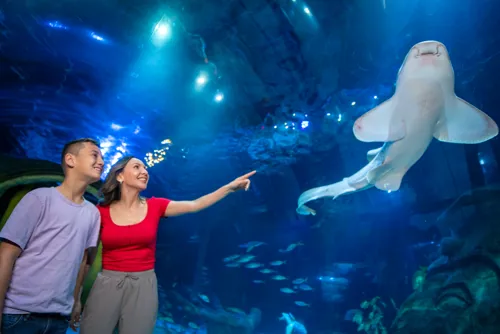
One of the most immersive ways to see sharks is through Florida's 360° Ocean Tunnel. The tunnel allows visitors to walk through an underwater environment while sharks, rays, sea turtles and tropical fish move around and above them.
The aquarium also offers a Shark Experience: Behind the Scenes Tour. This 30-minute experience focuses specifically on the shark collection and gives participants an opportunity to learn about shark care while getting a different perspective of the aquarium's ocean habitats. The current experience is offered daily at 11:30 a.m. and 2 p.m. for an additional fee.
Depending on the day and current schedule, visitors may also have opportunities to see shark feedings and educational presentations. Check the day's schedule when you arrive for current times.
A Simple Shark-Spotting Challenge for Kids
A family visit can become more engaging when children have a few questions to investigate.
Ask them to:
-
Look at the body. How does each shark's shape differ?
-
Look at the fins. Are they tall, rounded or pointed?
-
Look at the mouth. What does the shape suggest about how the shark feeds?
-
Compare sizes. Which sharks appear built for different habitats?
-
Look for markings. Which sharks have spots, stripes or distinctive patterns?
-
Compare the aquarium sharks with the Florida shark facts in this article. Which species live naturally in Florida waters, and which come from other parts of the world?
The goal isn't to turn a family outing into a formal science lesson. It is simply a way to encourage children to notice how an animal's physical characteristics connect to the environment where it lives.
SEA LIFE Orlando Aquarium and SEA LIFE Florida: What's the Difference?
Families researching aquariums in Central Florida may come across both SEA LIFE Orlando Aquarium and SEA LIFE Florida. They are separate attractions with different locations and collections.
|
Attraction |
Location |
Shark highlights |
Other marine-life experiences |
|
SEA LIFE Orlando Aquarium |
ICON Park, Orlando |
Bonnethead Sharks, Zebra Sharks, Bamboo Sharks, Epaulette Sharks and Coral Catsharks |
360° Ocean Tunnel, sea turtles, rays, jellyfish and other marine life |
|
SEA LIFE Florida |
LEGOLAND® Florida Resort, Winter Haven |
Blacktip Reef Sharks |
150+ species, 3,000+ animals, Oceanarium, Stingray Bay, Seahorse Nursery, Florida Wetlands and interactive exhibits |
SEA LIFE Florida is located within LEGOLAND® Florida Resort in Winter Haven and currently features more than 150 species and more than 3,000 marine animals. Its Oceanarium includes Blacktip Reef Sharks, while other highlights include stingrays, seahorses and jellyfish.
This distinction is particularly useful when researching Florida shark facts. A blacktip shark migrating along Florida's Atlantic coast is not the same species as a blacktip reef shark found at SEA LIFE Florida.
What Can Families Learn About Sharks at SEA LIFE Orlando Aquarium?
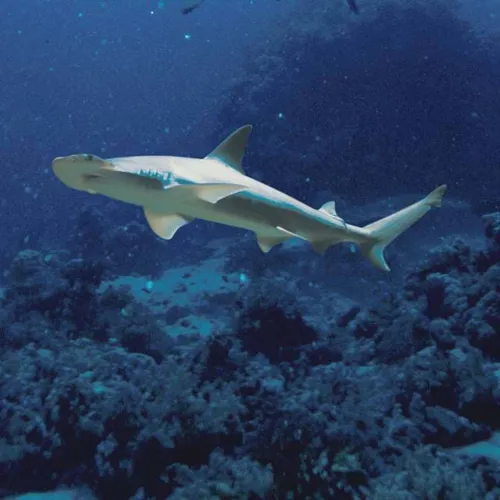
Florida's wild sharks provide a useful starting point for talking with children about marine ecosystems, but an aquarium makes it possible to explore those concepts without needing to find a shark in the ocean.
At SEA LIFE Orlando Aquarium, families can currently see several shark species and compare their physical differences.
A simple family shark challenge can make the visit more interactive:
-
Look at the body. How does each shark's shape differ?
-
Look at the fins. Are they tall, rounded or pointed?
-
Look at the mouth. What does the shape suggest about how the shark feeds?
-
Compare sizes. Which sharks appear built for different habitats?
-
Think about Florida. Which shark facts apply to wild Florida species, and which apply to species found elsewhere?
The goal isn't to turn a family outing into a formal science lesson. It is simply a way to encourage children to notice how an animal's physical characteristics connect to the environment where it lives.
SEA LIFE Orlando Aquarium is also fully indoors, so an aquarium visit can fit naturally into an Orlando itinerary when families need a break from outdoor attractions, Florida heat or changing weather.
Frequently Asked Questions About Florida Sharks
Yes. Florida's coastal waters support numerous shark species, and some species can form large seasonal aggregations.
Blacktip sharks are particularly notable because thousands gather in southeastern Florida during their winter migration.
That doesn't mean every Florida beach has large numbers of sharks close to shore. Shark distribution changes according to species, season, habitat, food availability and water conditions.
Florida waters are home to numerous shark species, including blacktip, bonnethead, bull, great hammerhead, lemon, nurse and tiger sharks.
Different sharks use different habitats, including beaches, bays, estuaries, reefs, mangroves and offshore waters.
There isn't a definitive statewide answer identifying one species as the most common in every Florida habitat.
Blacktip sharks are among the most common and widely encountered coastal sharks in Florida, and they can be found in coastal waters, bays and estuaries.
Yes. Bull sharks are one of the few shark species capable of living in freshwater for periods of time.
They can sometimes travel hundreds of miles inland through coastal river systems.
Blacktip sharks migrate seasonally along Florida's Atlantic coast.
The large aggregation in southeastern Florida generally peaks during winter, with the highest numbers typically occurring around January through March. Many sharks then move north in spring.
The individual risk is very low, although it varies according to how, where and when someone enters the water.
Florida recorded 11 confirmed unprovoked shark bites in 2025, with no fatalities.
Following basic beach-safety guidance, such as avoiding swimming during low-light periods and staying away from areas where sharks are known to be present, can further reduce exposure.
Shark distribution changes seasonally, so there isn't a permanent list of beaches with the most sharks.
Southeastern Florida is particularly notable for the winter aggregation of blacktip sharks.
It's also important to distinguish shark abundance from shark-bite frequency. A location with more recorded shark bites does not necessarily have the greatest number of sharks.
The Venice area is one of Florida's best-known destinations for finding fossil shark teeth on beaches.
The Peace River is another well-known fossil-hunting area, while creek beds, river edges and beaches throughout parts of Florida can expose fossil teeth.
Finding a tooth is never guaranteed, and local collecting rules should always be checked before searching.
See Sharks From a Different Perspective in Orlando
Florida sharks are part of a much bigger story than shark-bite statistics.
They migrate along the coast, use estuaries and rivers, occupy different ecological niches and have left behind millions of years of fossil evidence throughout the state.
For families visiting Orlando, SEA LIFE Orlando Aquarium offers another way to explore that story.
Located at ICON Park on International Drive, the indoor aquarium brings visitors face-to-fin with sharks and other marine life while providing an accessible setting for comparing species, habitats and adaptations. The 360° Ocean Tunnel provides a particularly different perspective, with sharks and other marine animals swimming around visitors.
The next time you find yourself wondering about Florida sharks, start with the questions behind the headlines:
Where do they live?
Why do they migrate?
How do different species survive in different habitats?
How are blacktip sharks different from blacktip reef sharks?
What can a fossil tooth tell us about Florida's ancient oceans?
And how many different kinds of sharks can you find in an aquarium?
Those questions reveal a much more fascinating Florida shark story.
Plan Your SEA LIFE Orlando Aquarium Visit
Ready to continue exploring marine life in Orlando? Check current SEA LIFE Orlando Aquarium admission options, Annual Passes, exhibits and seasonal experiences before your visit.
SEA LIFE Orlando Aquarium is located at ICON Park on International Drive, making it an easy addition to an Orlando family itinerary focused on indoor attractions, marine life and family-friendly experiences.
Families can see sharks year-round at SEA LIFE Orlando Aquarium, including through the 360° Ocean Tunnel, and can check current availability for the Shark Experience Behind the Scenes Tour for an additional way to learn about shark care.
For families traveling elsewhere in Central Florida, SEA LIFE Florida at LEGOLAND® Florida Resort provides another opportunity to see sharks, including Blacktip Reef Sharks, while exploring a separate aquarium experience in Winter Haven.
Related blogs
Complete Guide to Sharks in Florida: Species, Migration, and Where to See Them at Aquariums
Florida is one of the best places in the world to learn about sharks. From migrating blacktip sharks along the coastline to colorful reef sharks found inside aquariums, discover Florida shark species, migration patterns, fun facts, and the best places to see sharks—including SEA LIFE Orlando Aquarium at ICON Park.
Related blog posts
Bonnethead Sharks: Fun Facts About Florida's Friendly Hammerhead Relative
Discover fun bonnethead shark facts at SEA LIFE Orlando Aquarium! Learn where bonnethead sharks live, what they eat, how they're related to hammerheads, and why they're a must-see during Summer of Sharks.
Related blog posts
Epaulette Sharks: Meet Ellie, the Shark That Can Walk
Meet Ellie, one of the most unusual sharks at SEA LIFE Orlando Aquarium. From her distinctive eye like markings to her ability to move across the seafloor using her fins, epaulette sharks are full of surprises. Learn where these remarkable sharks live, what they eat and why Ellie is such a fascinating animal to see in Orlando.
Related blog posts
Zebra Shark Facts: One of the Ocean's Most Beautiful Sharks
Discover amazing zebra shark facts at SEA LIFE Orlando Aquarium! Learn where zebra sharks live, what they eat, why they change spots as they grow, and see them during Summer of Sharks.
Related blog posts
Meet the Bamboo Shark at SEA LIFE Orlando: Fun Facts for Kids & Families
Discover fun bamboo shark facts at SEA LIFE Orlando Aquarium! Learn what bamboo sharks eat, where they live, and why they’re featured in the Summer of Sharks event.
Related blog posts
Coral Catsharks: Everything You Need to Know About These Camouflaged Sharks
Discover fascinating coral catshark facts, their unique adaptive camouflage, and how to see them at SEA LIFE Orlando's Summer of Sharks event.
Related blog posts