Cunning underwater predators
Sharks have lived in our oceans for more than 420 million years! That makes them older than trees!
Their brains have evolved to become more intelligent and devoted to their senses – mainly their ability to smell. There are over 500 species of shark in our oceans and you'll see a few species when you explore our Ocean Tunnel!
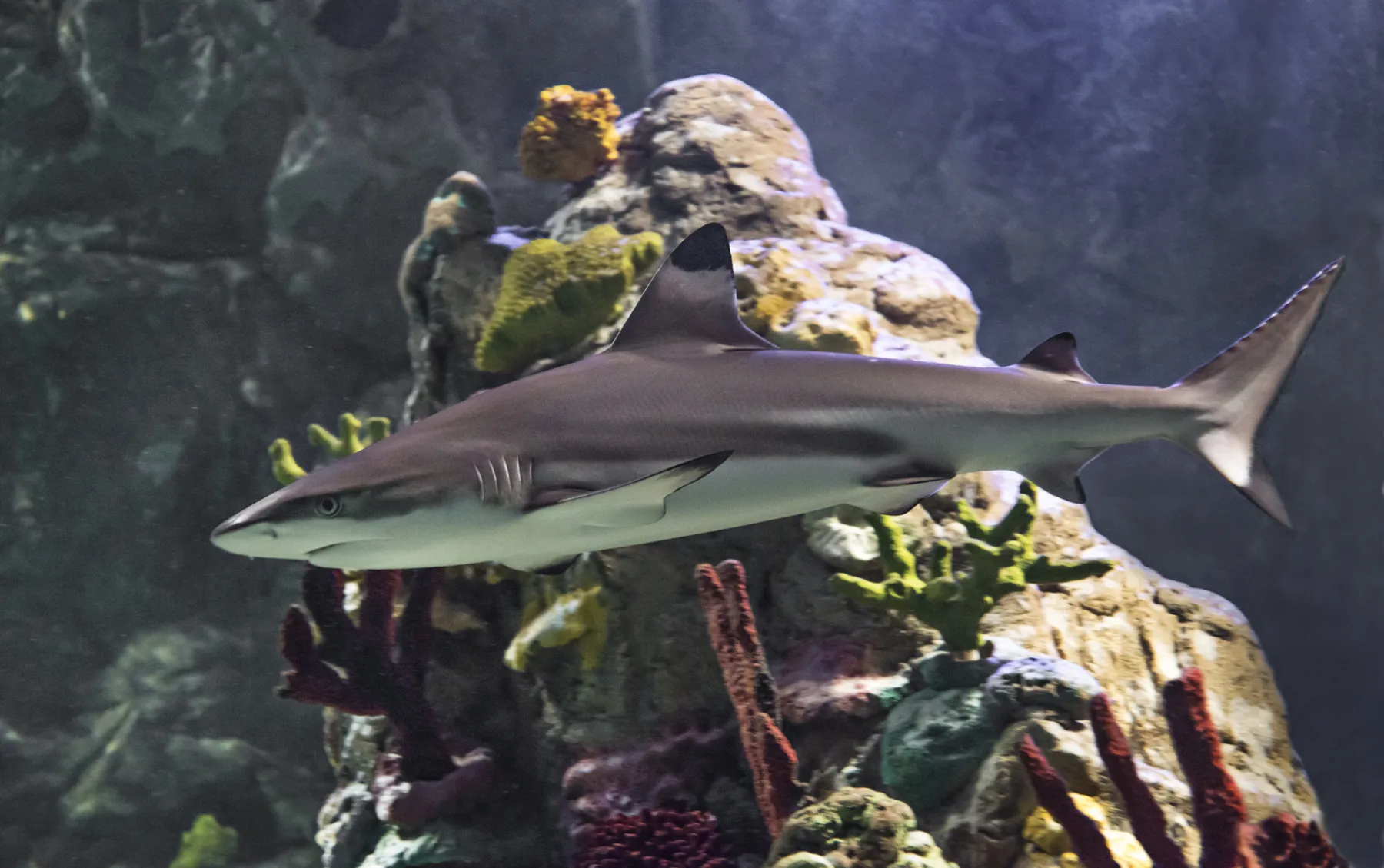
One of our favorites, the black tip reef shark, has prominent black markings on its fins so they're easy to spot! This JAW-some shark is found on the tropical coral reefs of the Indian and Pacific Oceans. They prefer shallow, tropical waters.
These sharks are viviparous, meaning they give birth to live young rather than laying eggs. In the first few years of their life, young black tip reef sharks often fall prey to larger fish such as groupers, grey reef sharks, tiger sharks or even bigger black tip reef sharks. Juvenile black tips often use mangroves as a nursery ground, hiding amongst the tightly woven roots where bigger sharks can't reach them.
Sharks play a vital role in keeping our oceans healthy by helping to keep populations of smaller fish in balance. Without sharks, entire marine ecosystems could become disrupted, affecting many other species that depend on these habitats.
Despite some common myths, sharks are not immune to cancer. It's a misconception that shark cartilage can be used to cure cancer—in fact, sharks can develop cancer just like humans.
By learning more about sharks and the important role they play in our oceans, we can help protect them for future generations. The SEA LIFE Trust is working to protect sharks and their ocean habitats through conservation, education and marine protection initiatives.

Bonnethead Shark
These sharks are the only omnivorous sharks, meaning they only feed on plants. They have the shortest gestation period of any shark, giving birth to live pups in 4.5-5 months.

Zebra Shark
These sharks can rest on the ocean floor due to having special throat muscled that pump oxygen-rich water over their gills. Originally born with stripes, as they grow bigger, their stripes transform…

Black Tip Reef Shark
Their name comes from their black markings on the tips of their dorsal fins and tail fin. They are relatively small, reaching 5-6 feet in length.

Nurse Shark
Often inhabit reefs and rest on sandy bottoms or in caves and crevices throughout the day. Their mouths can create suction to hoover up food. Their suction power has been compared to up to 10…

Epaulette Shark
Their lifespan is up to 20-25 years. They have large spots that act as false eyes to trick predators into thinking the shark is larger than it really is.
Horn Shark
Their defensive horns serve as a painful mouthful for predators. They have the highest bite force of sharks relative to their size, making shelled animals a good source of food. They also "walk" on…
Swell Shark
When threatened, these sharks can gulp massive amounts of seawater, which cause them to swell. Their skin contains special proteins which make them glow bright green in the moonlight.
White Spotted Bamboo Shark
Can typically be seen "walking" the ocean floor using their pectoral and pelvic fins. These sharks lay eggs, which are often referred to as "mermaids purses".
