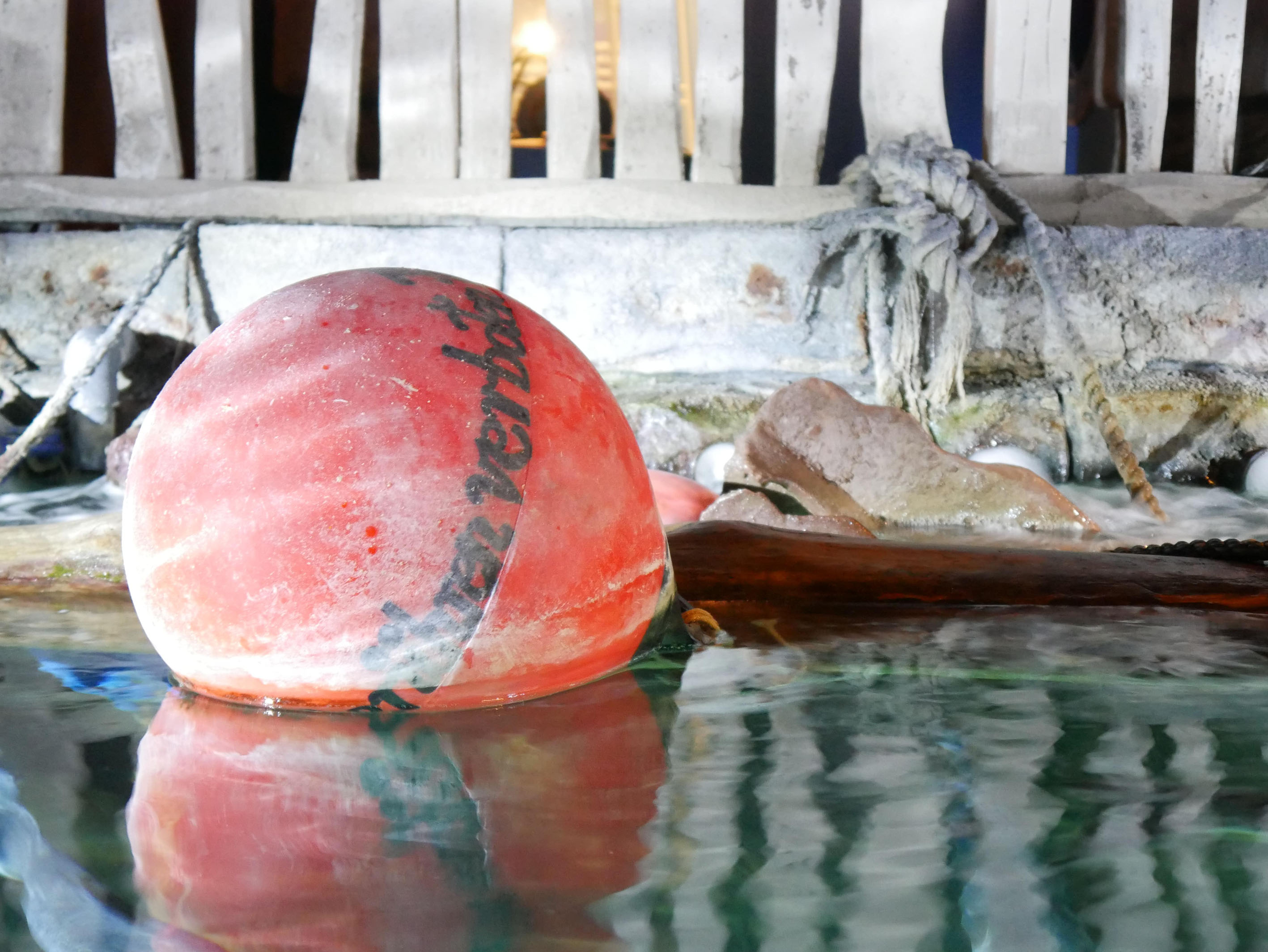
Port of Rotterdam
Here you can experience the vibrant life of one of Europe’s largest ports. Hidden among the giant ships and harbor basins are amazing marine creatures that are perfectly adapted to the hustle and bustle and the brackish water. Discover just how diverse and lively the underwater world in the heart of the port can be!

Small-spotted Cat Shark
Scyliorhinus canicula
Did you know?
- Small-spotted catsharks live in the eastern and northern Atlantic, as well as in the North Sea and the Mediterranean Sea. While they are the most common shark species in the North Sea, they are not found in the Baltic Sea.
- Catsharks prefer to live near the seafloor and can be found at depths of up to 100 m.
- Catsharks lay eggs. After internal fertilization by a male, the eggs are formed inside the female and, like a chicken egg, contain an embryo, a yolk, and egg white. When the eggs are laid, horn-like filaments from the eggshell protrude from the mother’s body. As soon as these filaments become caught on something, the egg is pulled out and then hangs from underwater structures such as plants or reefs. After 5 to 11 months, the babies—which are about 10 cm long—hatch and are immediately on their own. When a spotted cat shark reaches sexual maturity depends on its size: males reach sexual maturity at about 40 cm, while females do so once they reach 45 cm.
- The name “cat shark” derives from its cat-like eyes.
- A 2014 study by the University of Exeter demonstrated that small-spotted catsharks have distinct personalities. Some individuals are braver, more curious, or more aggressive than others.

Common two-banded seabream
Diplodus vulgaris
Did you know?
-
Two-banded seabream are protogynous hermaphrodites. This means that all individuals hatch as females and reach sexual maturity at around 1 to 2 years of age. Later in life, the females transform into males, gradually developing more male characteristics while their female reproductive traits regress.

Goldstripe
Sarpa salpa
Did you know?
- Although goldstripes are marine creatures, they are also commonly found in brackish water and estuaries.
- Their eyes are particularly beautiful: goldstripes not only have golden stripes but also golden irises.
- As social animals, goldstripes are usually found in large groups or schools.
- When goldstripes eat toxic algae in the wild, their flesh also becomes toxic, as the toxins accumulate in their bodies.
- Goldstripes are protandrous hermaphrodites. This means they hatch as males and reach sexual maturity. Over the years, some of them then transform into females.

Peacock Wrasse
Symphodus tinca
Did you know?
- Similar to other wrasse species, the peacock wrasse exhibits what is known as sexual dimorphism. This means that the animals can be easily identified as females or males based on their coloration. Males are brightly colored with stripes and spots, while females are gray to green with three dark brown stripes.
- The peacock wrasse primarily uses its pectoral fins for swimming. The caudal fin is used only for steering, unless danger threatens.
- Peacock wrasses can live up to 15 years.
- As juveniles, peacock wrasse sometimes “work” as cleaner fish to obtain food.
- To sleep, the peacock wrasse lies motionless on its side and drifts through the water. This makes it particularly vulnerable at night.

Cuckoo Wrasse
Labrus mixtus
Did you know?
- As with the peacock wrasse, the cuckoo wrasse exhibits sexual dimorphism. This means that females and males have different colorations. While females are red or orange, males have blue stripes.
- Cuckoo wrasse reach sexual maturity at 2 years of age, starting out as females and then becoming males (protogynous hermaphrodites). Males build a nest, which they aggressively guard until the young hatch.
- Cuckoo wrasse can live up to 17 years.
Get your tickets now!
Explore the other areas
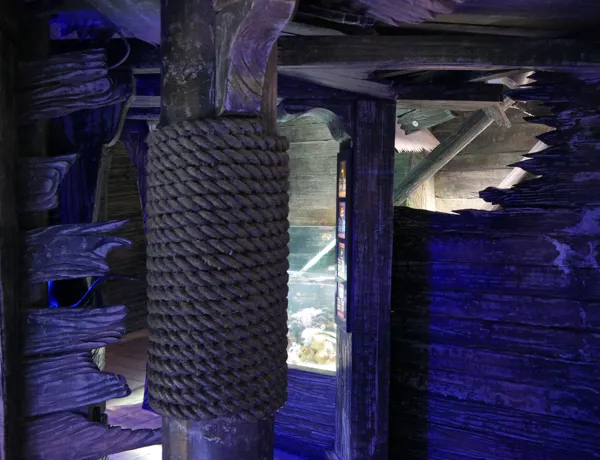
Shipwreck
Between old beams and sunken planks, a very special habitat has formed. Here, you’ll encounter fascinating marine creatures such as moray eels, scorpionfish, and lobsters—perfectly adapted to dark hideaways and hidden corners. Discover the secrets this wreck holds beneath the water’s surface!

North Sea
Here you can experience the fascinating creatures of the North Sea up close. Do you dare to take a peek into the mysterious world of rays and other North Sea animals? Discover just how diverse life is among the waves, mudflats, and rocks!

Tropical Reef
A colorful underwater world teeming with life awaits you here. Clownfish hide among the anemones. The vibrant colors and constant activity in the reef make this habitat a real highlight—discover for yourself just how lively and fascinating the tropical sea can be!

Ocean Tunnel
In the Ocean Tunnel, you’re right in the middle of the action instead of just a spectator: The glass ceiling offers a fascinating view into the world beneath the waves. Here, Leo—the impressive zebra shark—welcomes you along with his fascinating tank mates. As he glides elegantly through the water, other sharks and colorful sea creatures swim silently past and alongside you. An unforgettable spectacle right above your head.
