Complete Guide to Seahorses in Florida
- Saturday September 12th 2026
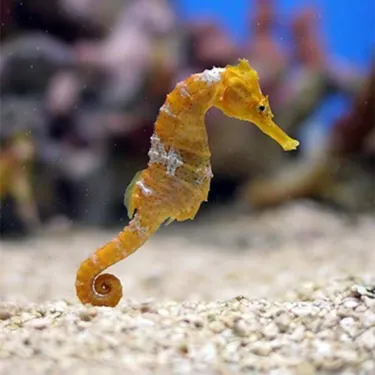
Meet the Seahorses at SEA LIFE Orlando Aquarium
If you want to see a real seahorse up close, SEA LIFE Orlando Aquarium is a great place to start. Seahorses are one of the fascinating marine animals featured at the aquarium, where guests can discover these unusual fish and learn more about their unique bodies, behavior and life cycle.
At SEA LIFE Orlando, you can find the seahorses at the Seahorse Temple, located just after the 360° Tunnel. The aquarium describes its seahorses as a unique feature exhibit and highlights fascinating facts including their horse shaped heads, monkey like tails and the remarkable fact that male seahorses carry developing babies.
Seeing a seahorse in an aquarium can also help explain why these tiny fish are so difficult to spot in the wild. Seahorses are masters of camouflage and are commonly associated with seagrass, mangroves, coral and other underwater habitats where they can hold onto vegetation with their tails.
So, where are seahorses in Florida? The answer includes both Florida's coastal waters and aquariums throughout the state.
Where Do Seahorses Live in Florida?
Seahorses are marine fish, despite their unusual horse shaped appearance. In Florida, they can be associated with shallow coastal environments, including seagrass beds, mangroves, estuaries, bays and other sheltered marine habitats.
Florida is particularly important for seahorses because its coastline contains many of the habitats these animals use for shelter and feeding. South Florida has extensive seagrass communities, and seahorses are among the fish that live within these underwater habitats.
Where Seahorses Live and Can Be Found
|
Habitat |
Why Seahorses Use It |
Where You May Find It in Florida |
|
Seagrass beds |
Provide places to hide, hunt and hold onto vegetation |
Florida Keys, Florida Bay and other coastal areas |
|
Mangroves |
Provide structure and shelter in shallow water |
South Florida, Florida Keys and coastal estuaries |
|
Estuaries |
Offer sheltered waters where fresh and salt water meet |
Coastal Florida |
|
Bays and lagoons |
Provide relatively protected shallow marine habitat |
Many areas along Florida's coast |
|
Coral and rocky habitats |
Offer places to shelter and attach their tails |
South Florida and the Florida Keys |
|
Floating vegetation |
Can provide camouflage and a place to attach |
Coastal waters |
Seahorses are not typically animals you will see swimming quickly across open water. They are relatively poor swimmers and often use their tails to anchor themselves to vegetation or other structures. The lined seahorse, for example, has been documented in association with mangroves, seagrasses, sponges, corals and floating Sargassum.
That camouflage is one reason finding a seahorse in the wild can be such a special experience.
What Types of Seahorses Are There?
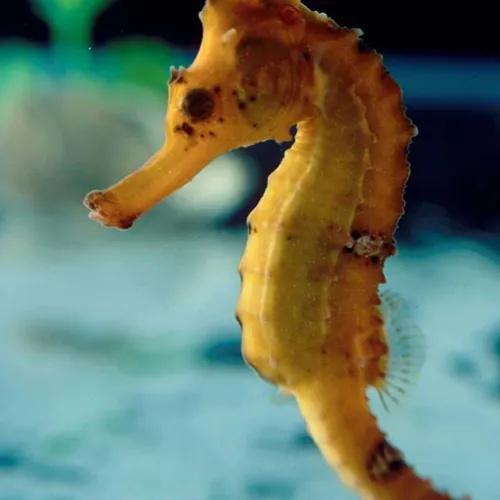
There are many different seahorse species around the world, and they vary considerably in size, color, markings and habitat.
SEA LIFE Orlando notes that there are at least 50 different types of seahorses.
Florida waters are home to several species, including the lined seahorse, longsnout seahorse and dwarf seahorse. Florida Fish and Wildlife Conservation Commission information specifically includes dwarf, lined and longsnout seahorses among Florida's marine life.
Types of Seahorses
|
Seahorse |
Scientific Name |
Size or Distinguishing Feature |
Where It Is Found |
|
Lined Seahorse |
Hippocampus erectus |
Can grow to more than 7 inches and has distinctive markings |
Western Atlantic, including Florida waters |
|
Longsnout Seahorse |
Hippocampus reidi |
Recognized by its long snout and slender appearance |
Caribbean and western Atlantic, including southern U.S. waters |
|
Dwarf Seahorse |
Hippocampus zosterae |
One of the world's smallest seahorses, reaching about 1 inch |
Gulf of Mexico, including Florida waters |
|
Bigbelly Seahorse |
Hippocampus abdominalis |
One of the largest seahorse species |
Australia and New Zealand |
|
Zebra Seahorse |
Hippocampus zebra |
Known for black and white striped markings |
Australia |
|
Knysna Seahorse |
Hippocampus capensis |
Rare species associated with South Africa |
South Africa |
|
Sindo's Seahorse |
Hippocampus sindonis |
Small species with a distinctive appearance |
Japan |
The lined seahorse is particularly relevant to Florida. The Florida Museum of Natural History identifies its range as extending through the western Atlantic and Gulf of Mexico, with the species associated with habitats including seagrass and mangroves.
The longsnout seahorse is another species associated with Florida and the wider Caribbean and western Atlantic. It can be found around seagrasses, mangroves and gorgonian corals.
The tiny dwarf seahorse is also found in Florida waters. The species can reach only about 1 inch in length, making it easy to understand why spotting one in the wild can take patience and a very careful eye.
Where Can You See Seahorses in Florida?
There are two main ways to see seahorses in Florida: visiting an aquarium or looking for them in appropriate coastal habitats.
For families who want a reliable opportunity to see seahorses, aquariums are often the easiest choice. In the wild, seahorses can be difficult to find because of their small size, camouflage and preference for vegetation.
Places to See Seahorses in Florida
|
Location |
City or Area |
Seahorse Experience |
|
SEA LIFE Orlando Aquarium |
Orlando area |
Seahorses can be seen at the Seahorse Temple |
|
The Florida Aquarium |
Tampa |
Dwarf and potbellied seahorses are featured in Reef Secrets |
|
Mote SEA Aquarium |
Sarasota |
Seahorses are featured in the Florida's Gulf Coast Gallery |
|
Cox Science Center and Aquarium |
West Palm Beach |
Seahorses are featured in the Aquariums of the Atlantic |
|
Boca Aquarium |
Boca Raton |
Seahorse Sanctuary featuring lined seahorses |
|
Florida coastal waters |
Various locations |
Wild seahorses can occur in suitable seagrass, mangrove and coastal habitats |
The Florida Aquarium in Tampa features both dwarf seahorses and potbellied seahorses in its Reef Secrets habitat.
Mote SEA Aquarium in Sarasota also features seahorses as part of its Florida's Gulf Coast Gallery.
The Cox Science Center and Aquarium in West Palm Beach features a Seahorse Corral within its Aquariums of the Atlantic exhibit.
Boca Aquarium in Boca Raton has a Seahorse Sanctuary featuring lined seahorses.
For families visiting the Orlando area, SEA LIFE Orlando offers the opportunity to see seahorses without needing to search for them in the wild. The Seahorse Temple is located just after the aquarium's 360° Tunnel.
Can You Find Seahorses in the Wild in Florida?
Yes. Seahorses live in Florida's coastal waters, although seeing one in the wild is not guaranteed.
South Florida's seagrass ecosystems provide important habitat for seahorses and other small marine animals. The Florida Museum of Natural History identifies seahorses as year round residents of south Florida seagrass habitats.
Florida's extensive seagrass ecosystems are especially important. The Florida Museum notes that south Florida has one of the most extensive seagrass communities in the world, covering more than 2,120 square miles.
The Florida Keys and Florida Bay are particularly associated with extensive seagrass habitat. Turtle grass, manatee grass and shoal grass are among the prominent seagrasses found in the region.
If you are exploring Florida's coastal waters, remember that a wild seahorse is a small animal that can blend into its surroundings remarkably well. Look carefully around seagrass, mangrove roots and other structures rather than expecting to see a seahorse swimming through open water.
Wildlife should always be observed respectfully and left in its natural habitat.
What Do Seahorses Eat?
Seahorses have a surprisingly unusual way of eating.
They do not have teeth or a traditional stomach. Instead, they use their small tubular snout to suck tiny prey directly into their mouths. Seahorses commonly eat small crustaceans and other tiny marine animals.
What Seahorses Eat
|
Food |
Examples |
How Seahorses Eat It |
|
Small crustaceans |
Tiny shrimp and other crustaceans |
Sucked through their snout |
|
Amphipods |
Small shrimp like animals |
Swallowed whole |
|
Small invertebrates |
Tiny marine animals |
Captured using suction |
|
Planktonic prey |
Very small drifting organisms |
Pulled into the mouth with suction |
SEA LIFE Orlando notes that seahorses commonly eat small crustaceans and may eat 30 to 50 times a day when food is available.
The Florida Aquarium similarly describes dwarf seahorses as eating crustaceans, amphipods and other invertebrates, while its potbellied seahorses eat small crustaceans such as amphipods and shrimp.
Because food moves through their digestive system quickly, seahorses need frequent access to small prey.
How Do Seahorses Eat Without Teeth?
A seahorse's snout works almost like a tiny underwater straw.
When prey gets close enough, the seahorse rapidly creates suction and pulls the food into its mouth. This allows it to capture tiny animals without chasing them through the water.
Their feeding strategy also works well with their lifestyle. Rather than being fast predators, seahorses often remain relatively still, camouflage themselves and wait for suitable prey to come within range.
Their ability to blend into seagrass and other underwater habitats makes this hunting strategy particularly effective.
Do Male Seahorses Give Birth?
Yes. One of the most famous seahorse facts is that male seahorses carry developing young.
During reproduction, the female transfers her eggs into the male's brood pouch. The male then carries the developing embryos until they are ready to emerge.
SEA LIFE Orlando describes the male seahorse giving birth by rocking back and forth until the tiny babies emerge from the pouch.
This is one of the most unusual reproductive strategies in the animal kingdom and is one of the reasons seahorses are such fascinating animals to learn about.
Do Seahorses Mate for Life?
Seahorse relationships are more complicated than a simple yes or no.
SEA LIFE Orlando notes that many seahorse species are monogamous and may remain with the same mate for long periods, sometimes for life.
The Florida Museum also describes complex courtship and bonding behavior in species such as the lined and longsnout seahorse.
Their courtship can include coordinated movements and changes in color, making the behavior another fascinating part of seahorse biology.
How Do Seahorses Swim?
Seahorses are not built for speed.
Their upright body shape and small fins make them relatively slow swimmers. Instead of traveling long distances quickly, they often use their prehensile tails to hold onto seagrass, coral, mangrove roots and other underwater structures.
Their tails are especially useful because they allow seahorses to remain in place while feeding or when currents are moving through their habitat.
The Florida Museum describes lined and longsnout seahorses as poor swimmers that rely heavily on camouflage and attachment to underwater vegetation or other structures.
Why Do Seahorses Have Tails That Curl?
A seahorse's tail is one of its most useful features.
Unlike many fish that use their bodies and fins to move continuously through the water, seahorses can wrap their tails around objects for support.
A seahorse may attach its tail to seagrass, coral, mangrove roots or other underwater structures. This helps it stay in place while feeding and provides stability in moving water.
Their curled tails also contribute to the unusual appearance that makes seahorses so recognizable.
Why Are Seahorses Difficult to Find?
If you have ever wondered why you rarely see seahorses while visiting the coast, camouflage is a big part of the answer.
Seahorses can blend into their surroundings, including vegetation and other underwater structures. Some species can also change color, helping them become less noticeable.
The Florida Museum describes both lined and longsnout seahorses as animals that use camouflage to help them survive.
Their small size and slow movement make this even more effective.
That is why seeing a seahorse at an aquarium can be such a memorable experience. Instead of searching through an entire seagrass meadow, visitors can observe these fascinating animals in a carefully designed habitat.
Why Are Seagrass Habitats Important to Seahorses?
Seagrass is much more than an underwater plant.
Seagrass meadows provide shelter, feeding areas and nursery habitat for many marine species. The Florida Museum identifies seahorses and pipefish among the resident fish associated with south Florida seagrass habitats.
Florida's seagrass habitats support a wide variety of marine life, making them an important part of the state's coastal ecosystems.
Why Seahorses Need Healthy Coastal Habitats
|
Habitat Feature |
Benefit to Seahorses |
|
Seagrass |
Provides shelter and places to attach their tails |
|
Mangroves |
Creates protected shallow water habitat |
|
Coral and other structures |
Provides places to hide and hunt |
|
Small crustaceans |
Provides food |
|
Sheltered coastal waters |
Helps support their slow swimming lifestyle |
|
Healthy ecosystems |
Supports the animals and plants seahorses depend on |
Protecting coastal habitats is therefore an important part of protecting seahorses.
Are Seahorses Fish?
Yes. Seahorses are fish.
Although they look very different from familiar fish such as clownfish or snapper, seahorses belong to the fish family Syngnathidae, which also includes pipefishes and seadragons.
They breathe underwater and have fins, but their upright body shape, bony plates, curled tail and horse shaped head give them a very different appearance.
The name "seahorse" comes from their resemblance to a horse, particularly the shape of their head.
How Big Are Seahorses?
Seahorse size depends on the species.
The dwarf seahorse is tiny and can reach only about 1 inch. At the other end of the spectrum, the bigbelly or potbellied seahorse is one of the largest species and can reach more than a foot in some cases.
This huge difference in size is one reason the term "seahorse" describes a surprisingly diverse group of fish.
What Is the Best Place to See Seahorses in Florida?
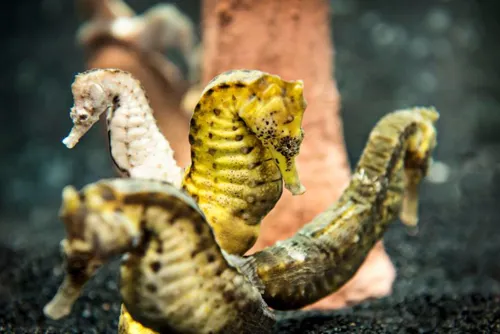
For visitors looking for an easy and family friendly way to see seahorses, SEA LIFE Orlando Aquarium is a great option.
The aquarium's Seahorse Temple provides an opportunity to observe these unusual fish up close while learning about their anatomy, habitat, diet and reproduction.
For people traveling elsewhere in Florida, several other aquariums also feature seahorses, including The Florida Aquarium in Tampa, Mote SEA Aquarium in Sarasota, Cox Science Center and Aquarium in West Palm Beach and Boca Aquarium in Boca Raton.
If you are hoping to see a seahorse in the wild, Florida's coastal seagrass and mangrove habitats are among the places where these animals can be found. However, wild sightings are never guaranteed, and seahorses should always be observed without disturbing them.
Frequently Asked Questions About Seahorses in Florida
You can see seahorses at several Florida aquariums, including SEA LIFE Orlando Aquarium, The Florida Aquarium in Tampa, Mote SEA Aquarium in Sarasota, Cox Science Center and Aquarium in West Palm Beach and Boca Aquarium in Boca Raton. Seahorses also live in suitable coastal habitats throughout Florida, including seagrass and mangrove environments.
Yes. Florida waters are home to several seahorse species, including the lined seahorse, longsnout seahorse and dwarf seahorse. These fish are associated with habitats such as seagrass beds, mangroves and other shallow coastal environments.
Seahorses primarily eat tiny marine animals such as small crustaceans, amphipods, shrimp and other small invertebrates. They use their tubular snouts to create suction and swallow their food whole.
Yes. Male seahorses carry developing embryos in a specialized brood pouch. When the young are ready, the male releases them from the pouch.
SEA LIFE Orlando Aquarium is one of the places where visitors can see seahorses near Orlando. The seahorses are located at the Seahorse Temple, just after the 360° Tunnel.
Discover Seahorses at SEA LIFE Orlando Aquarium
Seahorses may be small, but there is a lot to discover about these remarkable fish. From their curled tails and unusual swimming style to their camouflage, specialized feeding habits and extraordinary approach to reproduction, seahorses are unlike almost any other fish.
For families visiting Central Florida, SEA LIFE Orlando Aquarium offers the chance to see these fascinating animals up close and learn more about the marine habitats they call home.
Whether you are researching where seahorses live in Florida, looking for seahorse facts for kids, planning a family aquarium visit or simply wondering whether there are seahorses in Florida, these tiny fish offer a fascinating window into the diversity of life beneath the water.
The next time you visit the coast, look closely at the seagrass and mangroves. You may be closer to a seahorse than you think.
Related blogs
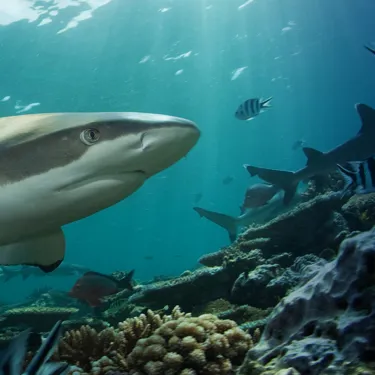
Complete Guide to Sharks in Florida: Species, Migration, and Where to See Them at Aquariums
Florida is one of the best places in the world to learn about sharks. From migrating blacktip sharks along the coastline to colorful reef sharks found inside aquariums, discover Florida shark species, migration patterns, fun facts, and the best places to see sharks—including SEA LIFE Orlando Aquarium at ICON Park.
Related blog posts
Complete Guide to Sea Turtles in Florida
Florida is one of the world's most important homes for sea turtles. From nesting beaches along the Atlantic Coast to rehabilitation hospitals and aquariums where you can learn about marine conservation, discover everything you need to know about Florida's incredible sea turtles in this complete guide.
Related blog posts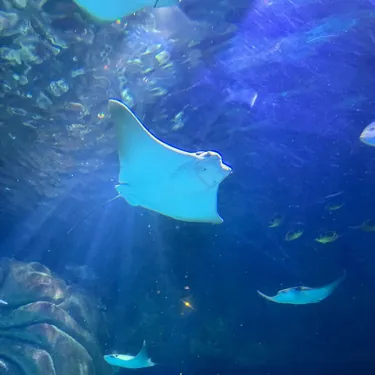
Complete Guide to Stingrays in Florida
How big can a stingray get? Are stingrays dangerous? What types of stingrays live in Florida waters? Discover the answers in this complete guide to Florida stingrays, including where to see them in aquariums and how to safely spot them at the beach.
Related blog posts
Meet the Axolotls at SEA LIFE Orlando: Fun Facts About One of the World's Most Fascinating Amphibians
Meet one of nature's most extraordinary amphibians at SEA LIFE Orlando Aquarium. Learn amazing axolotl facts, discover why these smiling salamanders can regenerate limbs, and find out where to see them during your next Orlando family adventure.
Related blog posts
How to Start Your Own Beach Cleanup in Florida: A Step-by-Step Guide
Florida’s beaches are home to incredible marine life, from sea turtles and tropical fish to countless ocean creatures that depend on clean habitats. Starting your own beach cleanup is a simple way to protect Florida’s coastline, reduce ocean pollution, and inspire your community to care for the ocean. Learn how to plan a successful beach cleanup, what supplies you need, and how organizations like SEA LIFE Trust are helping protect marine environments around the world.
Related blog posts
Meet Chely the Green Sea Turtle
One of the best places to see sea turtles in Orlando is SEA LIFE Orlando Aquarium, home to rescued Green Sea Turtle Chely and Loggerhead Sea Turtle Ted. Guests can see these incredible marine animals year-round while exploring Florida's only 360° Ocean Tunnel and learning about sea turtle rescue, rehabilitation, and ocean conservation.
Related blog posts
Meet Ted the Famous Loggerhead Turtle at SEA LIFE Orlando Aquarium
Discover Ted the rescued loggerhead sea turtle at SEA LIFE Orlando Aquarium at ICON Park. Learn his conservation story, where to see him, fun facts, and why he’s Orlando’s most-loved animal.
Related blog posts
Best Orlando Attraction for Animal Lovers: Where to See, Touch & Learn About Wildlife in Orlando
SEA LIFE Orlando Aquarium is one of the best Orlando attractions for animal lovers, offering a 360-degree ocean tunnel, hands-on touch pool, rescued sea turtle Ted, sharks, rays, jellyfish, and thousands of marine animals. Other top wildlife attractions include Disney's Animal Kingdom, Gatorland, SeaWorld Orlando, Wild Florida, and the Central Florida Zoo.
Related blog posts
Coral Catsharks: Everything You Need to Know About These Camouflaged Sharks
Discover fascinating coral catshark facts, their unique adaptive camouflage, and how to see them at SEA LIFE Orlando's Summer of Sharks event.
Related blog posts
Zebra Shark Facts: One of the Ocean's Most Beautiful Sharks
Discover amazing zebra shark facts at SEA LIFE Orlando Aquarium! Learn where zebra sharks live, what they eat, why they change spots as they grow, and see them during Summer of Sharks.
Related blog posts
Bonnethead Sharks: Fun Facts About Florida's Friendly Hammerhead Relative
Discover fun bonnethead shark facts at SEA LIFE Orlando Aquarium! Learn where bonnethead sharks live, what they eat, how they're related to hammerheads, and why they're a must-see during Summer of Sharks.
Related blog posts
Meet the Bamboo Shark at SEA LIFE Orlando: Fun Facts for Kids & Families
Discover fun bamboo shark facts at SEA LIFE Orlando Aquarium! Learn what bamboo sharks eat, where they live, and why they’re featured in the Summer of Sharks event.
Related blog posts
Epaulette Sharks: Meet Ellie, the Shark That Can Walk
Meet Ellie, one of the most unusual sharks at SEA LIFE Orlando Aquarium. From her distinctive eye like markings to her ability to move across the seafloor using her fins, epaulette sharks are full of surprises. Learn where these remarkable sharks live, what they eat and why Ellie is such a fascinating animal to see in Orlando.
Related blog posts