
ACTIVE LEARNING AND PARTICIPATION
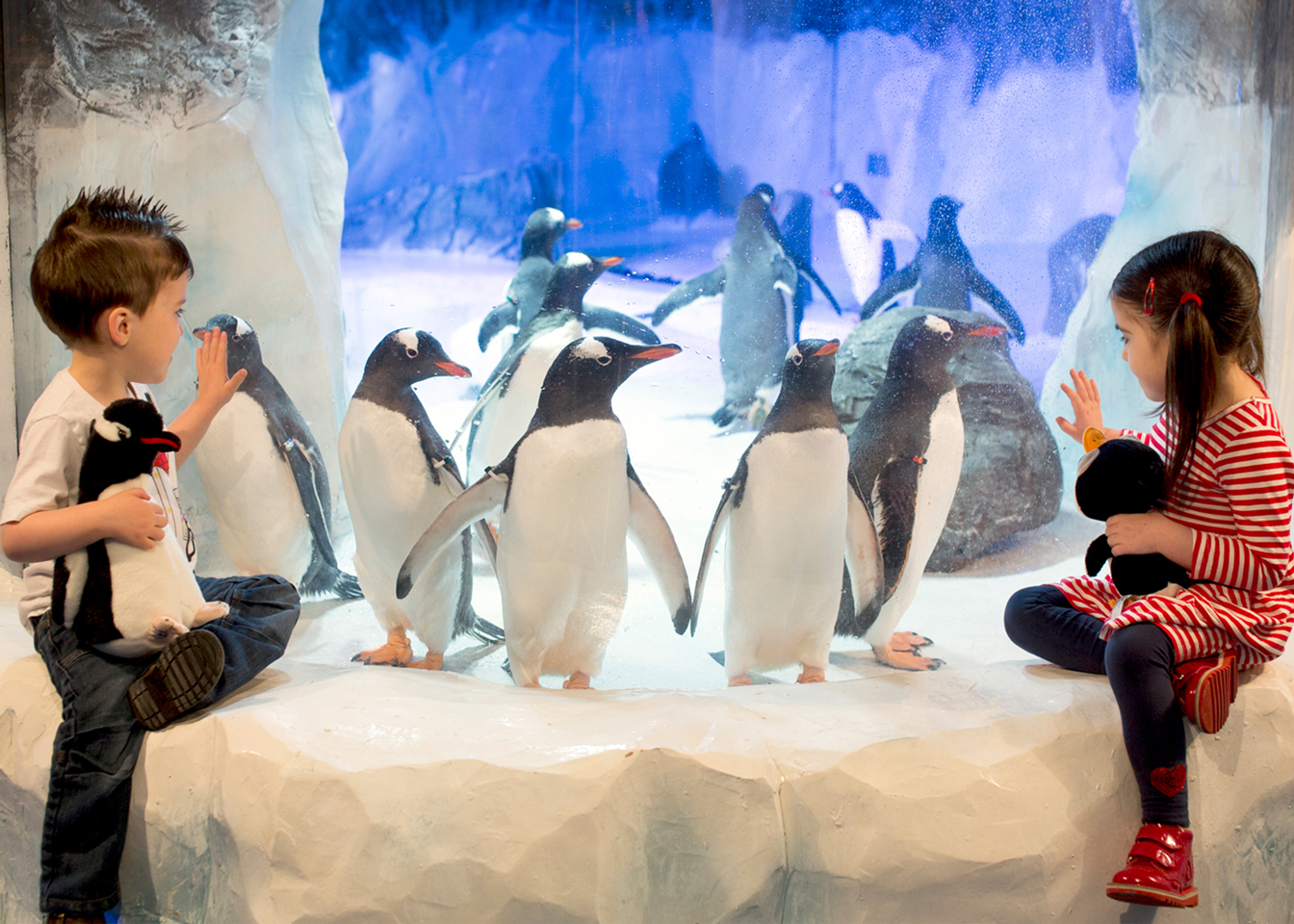
Our experience-led workshops and guided tours transform your school trip into an educational mission that brings the National Curriculum to life through hands-on discovery. These interactive, sessions move beyond simple observation and empower pupils to step into the shoes of Junior Aquarists, care providers and Sea Defenders to solve real-world environmental challenges.
Each of the workshops and tours below have been designed to match specific National Curriculum links and show clear workshop focus and lesson outcomes.
To ensure the learning lasts far beyond the day of your visit, each workshop or tour is supported by comprehensive pre visit and post visit lessons and worksheets, providing teachers with a seamless, ready-made resource pack to embed core Science, Geography, and PSHE objectives once you are back in the classroom.
Key Stage 1
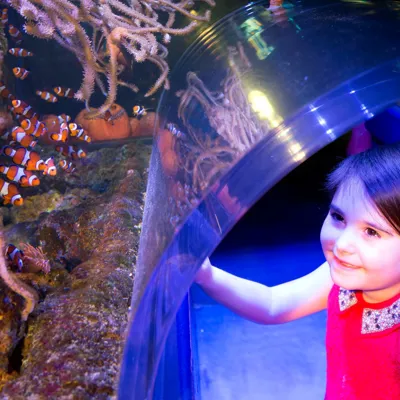
Habitat Explorer: The "Curiosity & Discovery" Approach
Theme: Sparking Curiosity, Discovering Nature
The main focus for KS1 is understanding and caring. Children move from thinking about their own “home habitat” to learning that animals need the same basic things to survive. The workshop uses hands-on activities to help pupils see that every creature has a “perfect place” where it belongs
Click below for workshop description, curriculum links and workshop outcomes
The Habitat Explorers workshop is a, hands-on introduction to the natural world, perfect for sparking the curiosity of KS1 pupils. By starting with the familiar environments of their own homes your pupils will quickly grasp that every living thing needs food, water, and a safe place to sleep. Using simple games and activities. They will discover how animals are perfectly 'built' for their homes. Whether it’s feeling how a Penguin’s feathers act as a four-layered suit of armour against the Antarctic chill or how animals have adapted to the different ocean layers from the bright, sunlit surface of the ocean down to the mysterious, dark trenches in the deepest reaches of the ocean floor or discovering why sea turtles live near their favourite snacks. Your pupils will leave with a clear understanding of what animals need to stay happy and healthy.
- Science
By the end of the session learners will be able to
- Identify the three basic needs for animal survival (food, water, shelter).
- Name and match common marine animals to their specific habitats.
- Describe simple physical features, such as why a penguin has feathers instead of fur.
Sea Defenders: The "Nature Hero" Approach
Theme: Materials, Sorting, and Personal Responsibility
The focus is on identification and positive action. Pupilsbecome "Ocean Helpers," learning that their everydaychoices, such as where they put their rubbish, have adirect impact on the creatures they see in the tanks.
Click below for workshop description, curriculum links and workshop outcomes
The Sea Defenders workshop turns KS1 pupils into 'Ocean Helpers' by teaching them the power of their ownchoices. Starting with the basics of what different things are made of they play a high-energy recycling gameto show where our rubbish should go. We use simple, impactful stories and the 'Sea Defender Pose' to helpchildren understand that our blue planet needs us to look after it. By exploring how a tiny sea horse mightfeel if it gets tangled in a net or how different animals can be affected by plastic pollution, we build empathyand show that even the smallest hands can make a big difference. It’s a perfect, gentle introduction toenvironmental care and the properties of everyday materials."
- Science
By the end of the session learners will be able to
- Describe the physical effect of pollution on marine species, using the Sea Horse/Netting example as a case study.
- Explain the link between Global Warming and Coral Bleaching
- Identify at least two actions to combat climate change.
Sea Creatures (The five welfare needs) The Pet Pal Approach
Theme: Kindness, Care, and Basic Needs
The focus is on empathy and responsibility. By linking the "Five Freedoms" to the pets they know and love, pupils move from being observers to "caregivers." The session simplifies the science of animal husbandry into a relatable checklist for kindness
Click below for workshop description, curriculum links and workshop outcomes
The Sea Creatures workshop is a heart warming look at what it takes to keep an animal healthy and smiling. By starting with the pets they love at home, we introduce 'the five welfare needs' as a simple checklist for kindness and care. KS1 pupils will love playing 'Junior Aquarist,' using fun props to decide if a fish needs a teddy bear or a healthy snack! We focus on the most important basics: food, water, and feeling safe. It’s a hands-on session that teaches children that animals aren’t just things to look at—they are living beings that need our love and correct care to thrive."
- Science
- PSHE
By the end of the session learners will be able to
-
List the 5 basic needs (The Five Freedoms) required by all animals
to live well. -
Correctly match a specific food source (Nourishment) to a marine
animal (e.g., Archer Fish and insects) -
Identify a "Comfort" feature for a sea creature, such as the correct
water temperature or a hiding spot.
Key Stage 2
Habitat Explorer: The Scientific Investigator Approach
Theme: Adaptation, Physics, and Environmental Systems
The focus for KS2 moves toward how things work and how living things depend on each other. It helps bridge the gap between basic survival ideas and understanding how life can survive in extreme environments. The workshop challenges older pupils with ideas about deep-sea physics, while still keeping the main biology concepts easy to understand for younger KS2 learners.
Click below for workshop description, curriculum links and workshop outcomes
Explore the deep-sea frontier where light fades and the cold takes hold. For older students, this mission uncovers the sophisticated physics of the five ocean zones. Study the master of disguise—the Penguin—and uncover the secrets of countershading, a vital form of evolutionary camouflage. From the shimmering surface to the midnight abyss, pupils will analyse how animals adapt to survive where humans cannot.
- Science
- Geography
By the end of the session learners will be able to
- Pupils will be able to Identify and sequence the five ocean zones.
- Explain how light and temperature change as depth increases.
- Define countershading and explain how this form of camouflage helps a penguin survive in the Antarctic.
- · Pupils will be able to identify the three core requirements of any habitat (food, shelter, and water)
- Apply core habitat requirements to humans and to humans and aquatic life.
Sea Defenders: The "Environmental Scientist" Approach
Theme: Sustainability, Climate Science, and Global Impact
The focus is on exploring and speaking up. Older pupils learn about the real science behind the climate crisis, starting with local issues like litter and moving to bigger global problems such as global warming and coral bleaching.
Click below for workshop description, curriculum links and workshop outcomes
The Sea Defenders mission looks at how humans impact ecosystems around the world. Older pupils learnwhat “biodegradable” means and use timelines to see how long everyday pollutants last. They also explorethe climate crisis, including how rising temperatures lead to coral bleaching. While younger KS2 pupils focuson food chains and habitats, Year 6 pupils think more about the global effects of plastic pollution andwarming oceans. The workshop ends with a “Sea Defender Pledge,” encouraging students to speak up forour oceans.
- Science
- Geography
By the end of the session learners will be able to
-
Define relevant terms such as biodegradable
-
Sequence common materials by their decomposition
time. -
Describe the physical effect of pollution on marine
species, using the Sea Horse/Netting example as a case
study.
Sea Creatures (The five welfare needs) The "Master Aquarist" Approach
Theme: Care, Ethics, and Managing Habitat
The focus shifts at KS2 to science and ethics. Pupils step into the role of a professional keeper, moving beyond "what" an animal needs to the technical "how" of providing it. This challenges older students to think about the precision required in modern marine care.
Click below for workshop description, curriculum links and workshop outcomes
This workshop offers a look at the ethics and science of animal welfare. KS2 students step into a vocational role, using professional tools like temperature probes and syringes to maintain a perfect artificial habitat. We move beyond simple 'needs' to explore the principles of enrichment and symbiosis While younger pupils focus on correct nutrition, Year 5 and 6 students are challenged with the 'physics of the tank,' discussing filtration systems and the precision required to mimic a wild environment.
- Science
- PSHE
By the end of the session learners will be able to
-
Define "Enrichment" and explain why a stimulating environment is vital to enable animals in our care to exhibit natural behaviours.
-
Demonstrate the use of professional tools (e.g., temperature probes) to maintain a healthy and comfortable habitat.
-
Analyse a symbiotic relationship, such as the Clownfish and Anemone, to explain how it ensures the appropriate environmental parameters for the best animal health and welfare.
