Diving into the whimsical world of Seahorses: 10 fun facts!
- Tuesday 27th January 2026
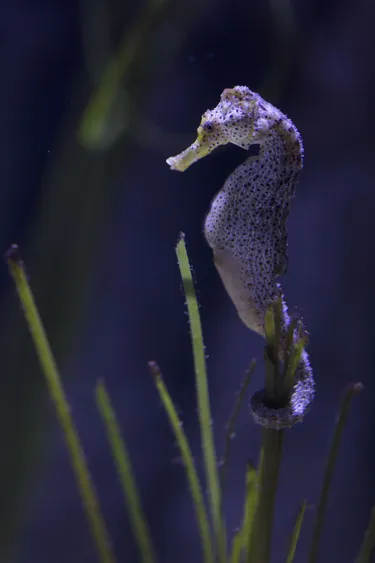
Seahorses are unique in appearance and possess a myriad of attributes that set them apart from other marine creatures. Let's dive into the whimsical world of seahorses and uncover 10 intriguing facts about these charismatic creatures.
1. Male Seahorses carry the babies during reproduction
During mating season, seahorses perform an elaborate courtship, swimming together, changing colour and intertwining their tails. The female transfers her eggs into the male's brood pouch, where they are fertilised and develop until they hatch.
When it's time to give birth, the male repeatedly contracts the muscles around his brood pouch, releasing hundreds of tiny, fully formed baby seahorses into the water.
2. Seahorses are monogamous
Did you know most seahorses are monogamous and often stay with their mate for life? Staying with one partner per mating season allows them to have more reproductive success!
3. Seahorses are terrible swimmers
... but they are great predators! They have to ambush their prey using their long snouts to rapidly slurp in water and food, allowing them to catch their prey.
Seahorses eat any live animal that's small enough to fit through their jaws.
4. They eat by suction
Seahorse suck their food through their snouts similar to a vacuum cleaner when they are eating. If the prey is large, their snouts expand as they are not able to chew and have to disintegrate food whilst they eat.
5. Seahorses don't have stomachs
Seahorses don't have stomachs, so food passes through their digestive system very quickly. Because of this, they need to eat almost constantly. Their diet mainly consists of tiny crustaceans, such as planktonic copepods and brine shrimp, and they can eat up to 3,000 of these each day.
6. There are over 40 different species of Seahorses
There are 46 different recognised species of seahorses - it can be hard to differentiate the difference between some of them due to their similar appearance and camouflage behaviours.
7. Their tails have a useful tool
Seahorses use their tails to help them hold onto objects. This makes eating food easier and prevents them from being pushed around by the current.
Their tails also act as protection against predators; seahorses tuck their heads close to their bodies to defend themselves.
8. Camouflage is their best friend
Typically seahorses are a variety of different colours including yellow, brown, red, or, orange with white lines across their body that help them blend into their reef habitats.
Seahorses are often considered to be masters of camouflage, their distinct colouration helps them avoid predators including crabs, but it also helps them to be predators too. They typically feed on small crustaceans including amphipods or other invertebrates.
9. Seahorses are fish
Much to the surprise of many, seahorses are actually fish! Their name was derived due to the similarity of their head to a horse's head but also from their Latin name, "Hippocampus" which translates to "horse animal".
Similar to most fish, seahorses have a swim bladder, which helps them float due to its balloon-like nature and their breathe through their gills.
10. Humans are their biggest threat
Numbers of seahorses have drastically declined due to non-selective fishing and intense targeted fishing.
Other major threats include habitat loss, climate change and bycatch!
Several conservation groups including The Seahorse Trust and Project Seahorse are working together to protect the species, but there is a lot we can also be doing at home! Including more recycling and reducing our usage of single-use plastic.


Interested in learning more about these fantastic animals?
Step into the Seahorse Hotel this February half term at SEA LIFE London Aquarium
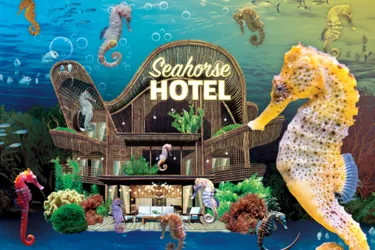
We are on a mission to try and help seahorses continue to live safely in our oceans. We already do loads but we need your help to really keep them safe.
Join us at our Seahorse Hotel event and meet these incredible animals as well as our other amazing SEA LIFE stars and learn all about them and how you could help to keep them safe.
Take on the challenges, find the answers, learn about the oceans and have loads of fun!
So come on, let’s do this! We’ll see you at reception!
Online from
£28
Per adult
On the day
£39
Per adult
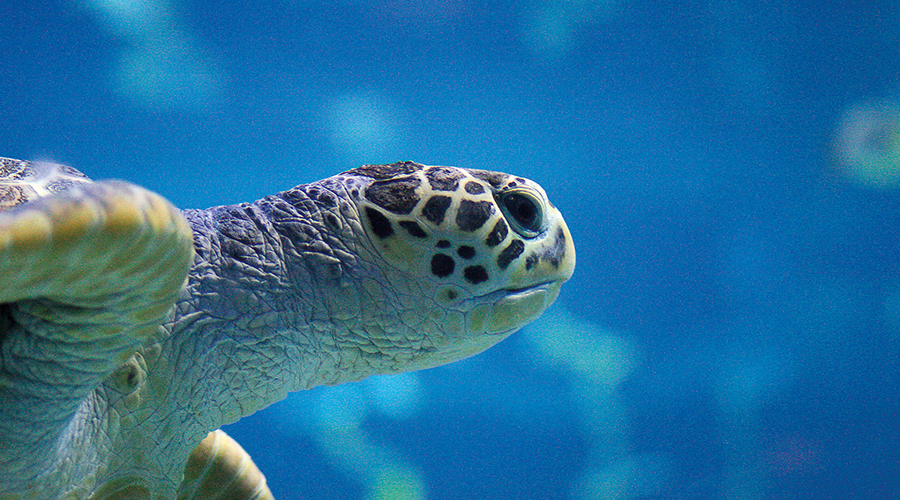
- Entry at your chosen time slot
- Discover species from around the world in 14 themed zones and interact with them at our public feeding, diving displays and touch pools
-
Book early & save!
Skip the Door Price and Save Online! Online tickets are always cheaper — book in advance for the best deal.
Ticket Type Save up to 28% with Advance Booking On the day / Walk-up Adult
From £28 £39 Child (2 - 15 years)
From £25 £35 Under 2
Free Free Please note online ticket prices vary depending on available capacity and prices may fluctuate during periods of high demand.
Online from
£33
Per adult
On the day
£44
Per adult

- Enjoy the freedom to arrive at any time on the day of your choice - no rush, just adventure at your own pace!
Online from
£32
Per adult
On the day
£43
Per adult
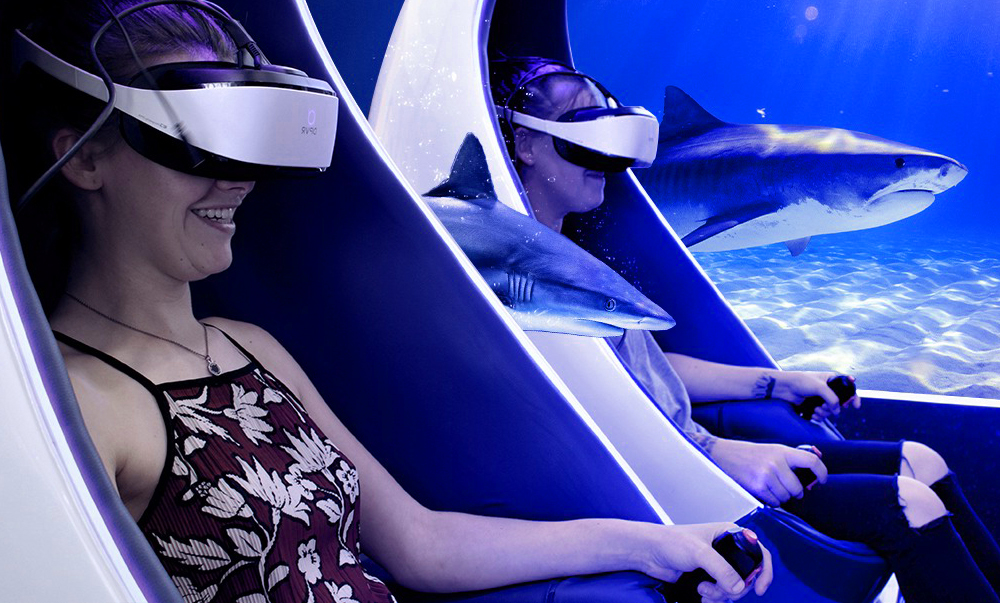
- Entry at your chosen time slot
- Your ticket includes an immersive VR experience: explore the ocean’s hidden wonders in stunning virtual reality
