Great Australian Stegostoma Semen Expedition (GASSE) 2.0
- Thursday 1st January 2026
- Conservation
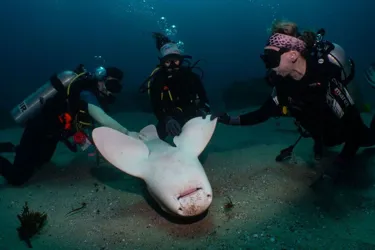
In December 2025, a team of scientists and veterinarians from Biopixel Oceans Foundation, Ocean Park Corporation Hong Kong, SEA LIFE Sydney Aquarium, Irukandji Shark & Ray Encounters, ReShark, Thrive Conservation, Griffith University, and The University of Queensland successfully completed the second Great Australian Stegostoma Semen Expedition (GASSE 2.0).
The expedition, led by Dr. Christine Dudgeon, focused on studying healthy populations of Indo-Pacific leopard sharks (Stegostoma tigrinum) that aggregate seasonally near North Stradbroke Island, off Brisbane. While the species is listed as Endangered on the IUCN Red List, regions such as Australia and New Caledonia still support relatively robust populations. These strongholds provide valuable opportunities to study the species’ biology and reproductive ecology in the wild.
During the expedition, the team successfully collected semen from 35 wild male leopard sharks, along with samples from an additional five males in human care at Sea World Gold Coast, Irukandji Shark & Ray Encounters, and SEA LIFE Sydney Aquarium. Using a natural and reversible state known as tonic immobility, researchers carefully collected semen before preparing a balanced mixture designed to optimize sperm vitality and maximize genetic diversity for breeding.
The artificial insemination (AI) work was led by Dr. Paolo Martelli and Irene Tai from Ocean Park Corporation Hong Kong, working alongside veterinary teams from the participating aquariums.
“Certain clinical techniques, such as underwater blood and semen collection, semen analysis and cryopreservation, and AI can be better developed and validated in the controlled environments presented by public aquariums. GASSE allows applying these skills and techniques in situ, thus creating new opportunities for research and conservation action, as well as for non-predatory replenishment of genetic material for sharks under human care.” — Dr. Paolo Martelli (Director of Veterinary Services, Ocean Park Hong Kong)
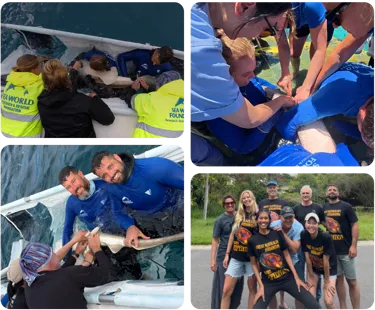
The collected samples were then used to perform AI on seven female leopard sharks across the three Australian aquariums. The objective is to increase egg production and enhance the genetic diversity of offspring that may support future rewilding efforts. While it will take time to determine reproductive success, the team expects initial insights over the coming three to six months.
The semen samples are also being analyzed as part of Siobhan Houlihan’s PhD research with Griffith University and Sea World Gold Coast, which is investigating the reproductive ecology of the species. Her work focuses on sperm characteristics, reproductive timing, breeding success, and hormone profiles, helping to improve understanding of breeding cycles in both wild and managed populations and informing future conservation breeding strategies.
Researchers also carried out a range of complementary studies during the expedition. Blood samples were collected from 20 wild females and seven females in human care, as well as from all sampled males, to analyze reproductive hormone profiles.
In addition, ultrasound examinations were conducted on 17 wild females to assess ovarian follicle development and reproductive readiness, providing valuable baseline data to refine the timing of conservation breeding interventions. This work forms part of Gesa Mueller’s PhD with the University of the Sunshine Coast.
Movement ecology was another major focus. A total of 10 wild leopard sharks were surgically implanted with internal acoustic tags, which can remain active for up to 10 years, enabling long-term tracking through the IMOS acoustic receiver network. In addition, three wild females were fitted with satellite tags to track broader-scale movements beyond the acoustic array for approximately six months, generating detailed data on diving behavior, habitat use, and thermal tolerance.
"GASSE 2.0 was a great success. Streamlined field methods allowed us to sample more sharks than in 2024 and enabled more females in human care to undergo artificial insemination. We look forward to genetically testing any resulting pups." — Dr. Christine Dudgeon (Senior Researcher, Biopixel Oceans Foundation & Co-Chair StAR Project Research Working Group)
GASSE 2.0 was generously supported by the Djinda Foundation and the ROLEX Perpetual Planet Initiative.
Related blogs
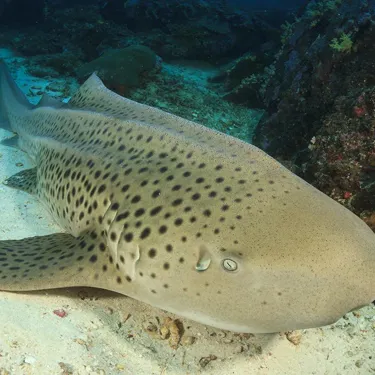
A Gold StAR for our endangered zebra sharks
SEA LIFE Sydney is proud to be a part of the StAR Project, run by ReShark to help repopulate and breed endangered zebra sharks.
Read more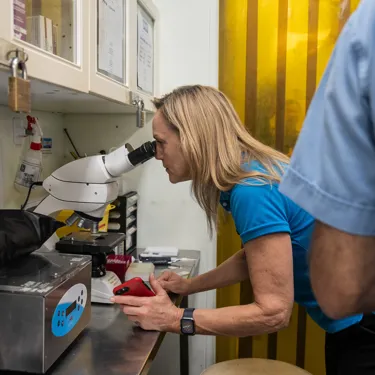
World-First Reproductive Technique Provides Hope for Endangered Wild Shark Populations
SEA LIFE Sydney Aquarium is thrilled to announce its involvement in an exciting, world-first development in shark science and conservation, as their female leopard shark (Stegostoma tigrinum) population have been artificially inseminated with sperm collected from wild male leopard sharks.
Read more
Zebra Shark Rewilding Update: 62 Sharks Now Swimming in Raja Ampat
The StAR Project continues to deliver major milestones in the recovery of endangered zebra sharks (Stegostoma tigrinum) in the waters of Raja Ampat, Indonesia.
Read more
Where to See Sharks in Sydney
Earn your daredevil stripes; come face to fin with five species of shark with SEA LIFE Sydney Shark Dive Xtreme.
Read more